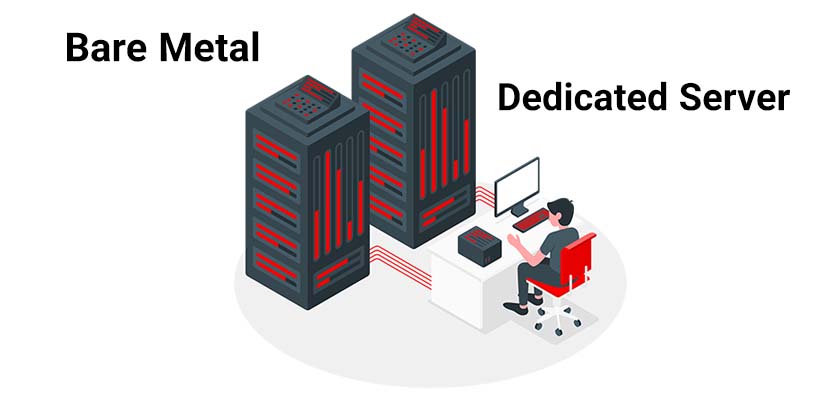
In the realm of web hosting, the terms “bare metal server” and “dedicated server” often get used interchangeably. While they share similarities, there are nuances that set them apart. Let’s delve into the intricacies of bare metal server vs dedicated server, these two hosting options.
Bare Metal Server: A Raw Powerhouse
A bare metal server is a physical server that you have exclusive access to. It’s like having your own personal computer in a data center, providing you with complete control over the hardware and software. This level of control offers several advantages:
Key Characteristics:
- Customization: You can tailor the server’s configuration to your exact requirements, ensuring optimal performance for your applications. For instance, you can choose specific processors, RAM, storage, and network interfaces to match your workload.
- Performance: Bare metal servers offer superior performance compared to virtualized environments due to the absence of resource contention. This means that your applications have exclusive access to the server’s resources, resulting in faster response times and lower latency.
- Security: With exclusive access, you have greater control over security measures. You can implement customized security policies, install specialized security software, and monitor the server’s activity closely to mitigate risks.
- Scalability: Bare metal servers can be easily scaled up or down to accommodate changing workloads. If your application’s demands increase, you can add more resources like additional processors, RAM, or storage. Conversely, if your workload decreases, you can reduce the server’s capacity to optimize costs.
Ideal Use Cases:
- High-traffic websites: E-commerce stores, gaming servers, and content delivery networks.
- Resource-intensive applications: Databases, video editing, and scientific simulations.
- Enterprise-level applications: CRM systems, ERP software, and custom-built applications.
- Security-sensitive applications: Financial institutions, healthcare organizations, and government agencies.
Dedicated Server: A Managed Option
A dedicated server is also a physical server, but it’s often managed by a hosting provider. While you have exclusive access to the server’s resources, the provider handles tasks like hardware maintenance, network infrastructure, and security. This shared responsibility can simplify management for some users.
Key Characteristics:
- Physical Hardware: Similar to a bare metal server.
- Managed Services: Hosting provider handles certain administrative tasks.
- Less Control: You have less control over the server’s configuration compared to a bare metal server.
- Support: Benefit from the hosting provider’s technical support.
- Cost: Often slightly more expensive due to the managed services.
Ideal Use Cases:
- Businesses that need a dedicated server but lack the in-house expertise to manage it.
- Individuals or small businesses that want the performance benefits of a dedicated server without the complexity of managing it themselves.
- Organizations that require a reliable and secure hosting solution but don’t have the resources to invest in a full-time IT team.
Choosing the Right Option: A Comparative Analysis
The decision between a bare metal server and a dedicated server depends on your specific needs, budget, and technical expertise. Here’s a comparison of the key factors to consider:
| Control | Complete | Partial |
| Customization | High | Moderate |
| Performance | Excellent | Excellent |
| Scalability | Excellent | Good |
| Cost | Lower | Higher |
| Management | You handle it | Hosting provider handles some |
| Support | Limited | Comprehensive |
When to Choose Bare Metal
Bare metal servers are ideal for:
- High-performance applications: If your applications demand maximum speed and processing power, a bare metal server is the way to go. This includes applications such as video streaming, gaming servers, and data-intensive workloads.
- Custom configurations: If you need to tailor the server’s hardware and software to meet specific requirements, bare metal offers the flexibility you need. For instance, if you need a server with a specific processor or GPU for machine learning or AI, a bare metal server would be the best choice.
- Sensitive data: For applications that handle sensitive data, the increased control and security of a bare metal server can be essential. You can implement more stringent security measures and have greater visibility into the server’s operations.
- Scalability: If your workload is expected to fluctuate significantly, bare metal servers can be easily scaled up or down to accommodate changing demands. This is especially beneficial for businesses with seasonal or unpredictable workloads.
When to Choose Dedicated
Dedicated servers are suitable for:
- Smaller workloads: If your application doesn’t require the extreme performance of a bare metal server, a dedicated server can be a more cost-effective option. This includes applications such as small websites, email servers, and light-duty databases.
- Managed services: If you prefer to outsource server management tasks, a dedicated server with managed services can simplify your workload. The hosting provider will handle tasks like operating system updates, security patches, and hardware maintenance.
- Entry-level dedicated server: If you’re new to dedicated servers and want to test the waters without the full commitment of a bare metal server, a dedicated server can be a good starting point. You can gradually scale up to a bare metal server as your needs grow.
Conclusion
The choice between a bare metal and dedicated server depends on your specific needs and preferences. If you require maximum control, performance, and customization, a bare metal server is the way to go. However, if you prefer a more managed approach and don’t need the extreme performance of a bare metal server, a dedicated server can be a suitable option.
By carefully considering the key differences between these two server types, you can make an informed decision and select the infrastructure that best aligns with your goals and requirements.