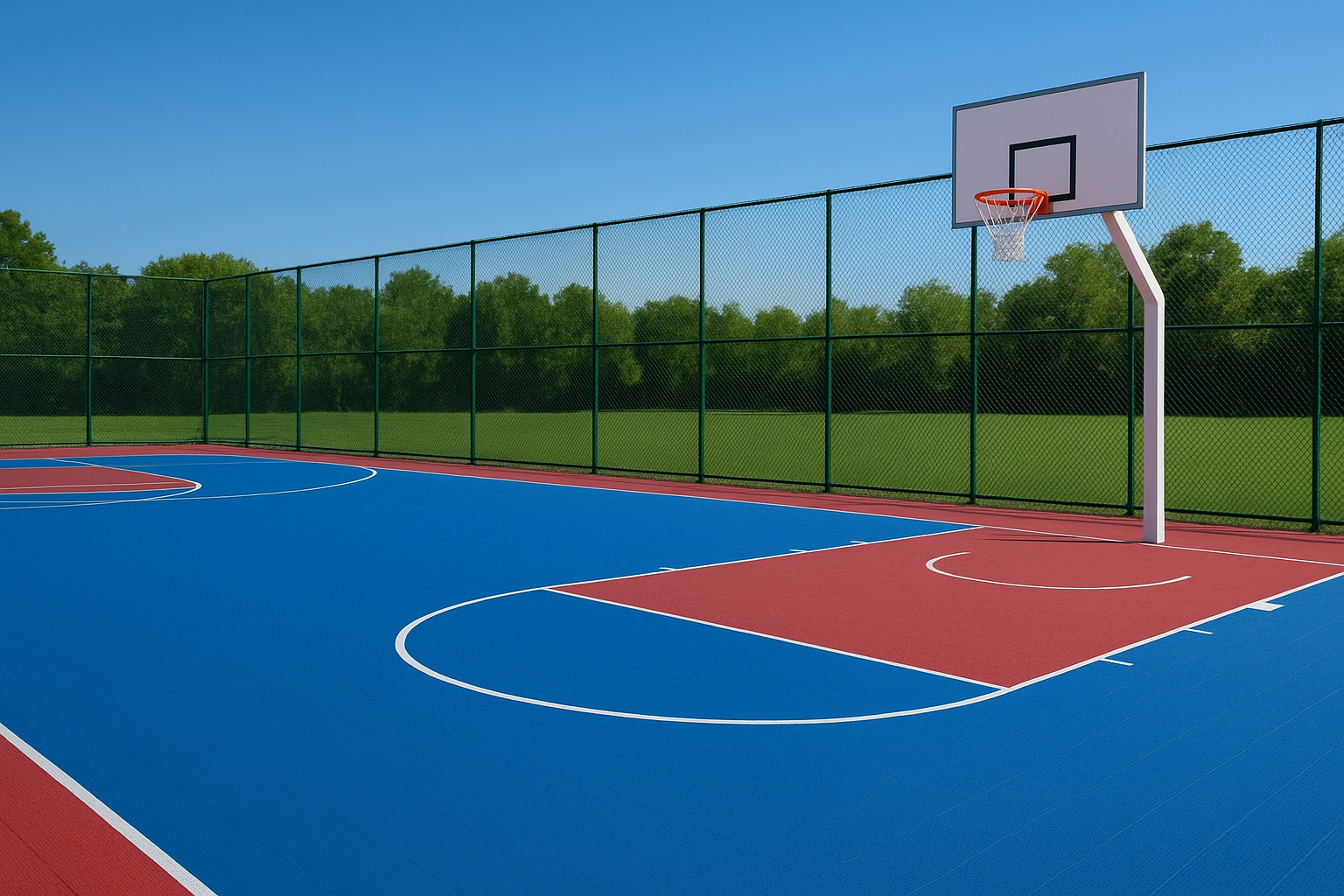
Basketball is one of the fastest-growing sports in schools, academies, clubs, and residential societies. But to ensure safety, top-tier performance, and long-lasting durability, the right basketball court flooring is essential. From professional indoor arenas to outdoor recreational courts, the flooring material strongly influences ball bounce, athlete comfort, shock absorption, traction, and injury risk.
This detailed guide covers everything you need to know about basketball court flooring — types, features, cost, installation process, maintenance requirements, and expert buying tips.
Why Basketball Court Flooring Matters
A basketball court isn’t just a flat surface — it is an engineered sports flooring system designed to:
-
Prevent injuries through shock absorption
-
Provide consistent ball bounce
-
Offer excellent grip and traction
-
Withstand heavy foot traffic and aggressive play
-
Resist wear and weather (for outdoor courts)
-
Improve player performance and comfort
Whether you’re constructing a new court or resurfacing an existing one, selecting the right flooring is key to long-term value.
Types of Basketball Court Flooring
Basketball floors are available in a variety of materials depending on budget, application (indoor/outdoor), and performance expectations.
1. Maple Hardwood Flooring (Indoor)
Widely used in professional basketball courts like NBA arenas.
Features
-
Superior natural bounce and traction
-
Great shock absorption
-
Classic premium look
Best For
Indoor stadiums, universities, sports complexes
Drawback
High cost and high maintenance
2. Polypropylene (PP) Interlocking Tiles (Indoor & Outdoor)
One of the most popular choices for modern courts.
Features
-
UV-resistant, weather-proof & durable
-
Fast drainage for outdoor courts
-
Excellent cushioning & grip
-
Quick installation and easy replacement
Best For
Schools, academies, residential courts, commercial sports facilities
3. Acrylic Sports Flooring (Outdoor)
A multi-layer acrylic coating applied over asphalt or concrete.
Features
-
Slip-resistant with excellent bounce
-
Low maintenance and long lifespan
-
Available in multiple colors
Best For
Outdoor stadiums, clubs, parks, community grounds
4. PU (Polyurethane) Flooring (Indoor)
A seamless synthetic sports flooring ideal for multipurpose halls.
Features
-
High elasticity for injury prevention
-
Great traction and fast ball rebound
-
Hygienic and seamless surface
Best For
Indoor sports halls with multiple sports including basketball, badminton, volleyball
5. Vinyl Flooring (Indoor)
A cushioned synthetic flooring that mimics wood aesthetics.
Features
-
Cost-effective alternative to hardwood
-
Comfortable & non-slip surface
-
Suitable for multipurpose use
Best For
Schools, fitness centers, multi-sport halls
Basketball Court Flooring Cost
| Maple Hardwood | ₹450 – ₹650 |
| PP Interlocking Tiles | ₹180 – ₹380 |
| Acrylic Flooring | ₹120 – ₹260 |
| PU Flooring | ₹350 – ₹550 |
| Vinyl Flooring | ₹250 – ₹420 |
⚠ Costs vary depending on brand, thickness, court size, and installation location.
Basketball Court Installation Process
The installation method depends on the flooring material, but in general, these steps apply:
Step-by-Step Process
-
Ground Preparation – Cleaning, leveling, and repairing base surface
-
Sub-Base Construction – Concrete or asphalt (for outdoor courts)
-
Flooring Installation
-
Hardwood: Anchoring & polishing
-
PP Tiles: Interlocking tile system
-
Acrylic: Multi-layer coating
-
PU/Vinyl: Cushion pad + surface layer
-
-
Marking & Line Painting – FIBA/NBA-standard line marking
-
Final Inspection & Handover
A professional installation ensures safety, durability, and proper play characteristics.
Maintenance Guide for Long Court Life
To extend the lifespan of your basketball court flooring:
| Dry sweeping / mopping | Daily |
| Wet cleaning with neutral solution | Weekly |
| Deep inspection for cracks, loose tiles | Monthly |
| Resurfacing (Acrylic/PU/Vinyl) | Every 4–7 years |
| Polishing (Hardwood) | Every 12–18 months |
Avoid harsh chemicals, water stagnation, and dragging heavy equipment across the surface.
Indoor vs Outdoor Basketball Court Flooring Comparison
| Flooring Type | Hardwood, PU, Vinyl | Acrylic, PP Tiles |
| Durability | High | Very high with UV protection |
| Traction | Balanced grip | Anti-skid surface |
| Maintenance | Moderate | Low |
| Cost | High | Medium |
How to Choose the Right Basketball Court Flooring
Ask yourself:
✔ Is the court indoor or outdoor?
✔ What is the expected foot traffic?
✔ Is the court for professional sports or recreational play?
✔ What is the project budget & timeline?
Recommended choices
-
Indoor professional courts → Maple Hardwood
-
Indoor schools & multipurpose halls → PU or Vinyl Flooring
-
Outdoor academies & commercial courts → PP Interlocking Tiles
-
Outdoor parks & public courts → Acrylic Flooring
Conclusion
Choosing the right basketball court flooring ensures player safety, better performance, long-lasting durability, and a world-class playing experience. Each flooring type—hardwood, acrylic, PP tiles, PU, or vinyl—comes with unique benefits, and the ideal choice depends on location, use type, budget, and maintenance expectations.
Whether you’re building a basketball court for a school, academy, stadium, or residential community, investing in premium sports flooring pays off in the long run.