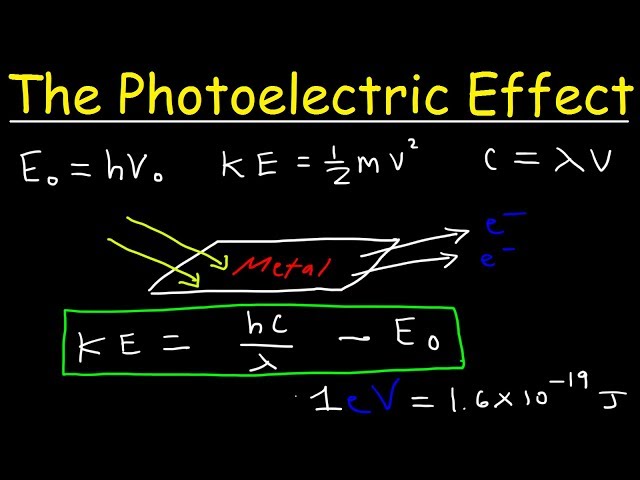
The concept of work function plays a crucial role in physics and electrical engineering, especially in fields like semiconductors, photoelectric emission, and material science. Understanding how to calculate work function is essential for designing efficient electronic devices and optimizing material properties. But what exactly is work function, and how do we determine it? Let’s dive into the fundamentals.
What is Work Function?
Work function refers to the minimum energy required to remove an electron from a solid material into the vacuum. It is typically measured in electron volts (eV) and varies based on the type of material. For metals and semiconductors, work function determines their electronic behavior, influencing conductivity and emission properties.
Factors Affecting Work Function Calculation
Several factors impact the calculation of work function, including:
- Material Type: Different metals and semiconductors have unique work function values due to their atomic structure.
- Surface Condition: The presence of oxides, contaminants, or rough surfaces can alter the effective work function.
- Temperature Influence: Work function can shift with temperature changes, impacting electronic applications.
- External Fields: Applied electric or magnetic fields can modify the energy required for electron emission.
How to Calculate Work Function
There are multiple methods to calculate work function, depending on the application. Here are some common approaches:
1. Using the Photoelectric Equation
The most direct method to determine work function is through the photoelectric effect, governed by Einstein’s equation:
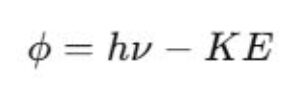
Where:
- is the work function (eV)
- is Planck’s constant
- is the frequency of incident light (Hz)
- KE is the kinetic energy of emitted electrons (eV)
By measuring the energy of emitted electrons and the frequency of incident light, the work function can be determined.
2. Thermionic Emission Method
For metals, work function formula can be written as Richardson’s equation:
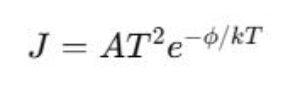
Where:
- J is the current density
- A is Richardson’s constant
- T is the temperature (K)
- is Boltzmann’s constant
- is the work function (eV)
By measuring thermionic current at different temperatures, we can extract the work function.
3. Kelvin Probe Method
This non-contact technique measures the surface potential difference between a reference electrode and the material, providing an estimate of work function.
4. Density Functional Theory (DFT) Simulations
For theoretical calculations, DFT simulations predict work function values by analyzing electronic structure and surface interactions.
Final Thoughts
Understanding and calculating work function is fundamental in physics and electrical engineering. Whether using photoelectric measurements, thermionic emission, or computational methods, accurate determination of work function leads to better material optimization and device efficiency.