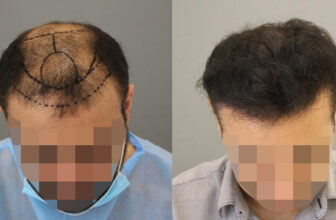
Hair loss can be a distressing experience for many, particularly when it leads to a bald head. For those dealing with complete or near-complete baldness, one major question arises: Does a hair transplant really work on a bald head? In recent years, with advancements in medical technology and growing global interest in aesthetic procedures, more people are seeking reliable solutions such as a Hair Transplant in Dubai, known for its high-standard cosmetic procedures.
In this comprehensive guide, we’ll explore how hair transplants work, whether they’re effective on bald scalps, the science behind them, and what expectations you should have realistically.
Understanding Hair Transplants: The Basics
A hair transplant is a surgical procedure that involves removing hair follicles from a donor area (typically the back or sides of the head) and implanting them into areas experiencing hair loss or complete baldness.
There are primarily two types of hair transplant techniques:
| Technique | Full Form | Description |
|---|---|---|
| FUT (Strip Method) | Follicular Unit Transplantation | A strip of scalp with hair is removed and dissected into grafts. |
| FUE | Follicular Unit Extraction | Individual hair follicles are extracted and implanted into the bald area. |
Both methods aim to restore natural-looking hair growth, but they differ in procedure, recovery time, and scarring.
Can Hair Transplants Work on a Bald Head?
The short answer is yes—but with certain conditions. A hair transplant can work on a bald head, provided the individual has a sufficient donor area with healthy hair follicles. The success of the transplant largely depends on the availability of these donor follicles.
Key Considerations for Bald Heads:
| Factor | Importance |
|---|---|
| Donor Hair Availability | The more healthy follicles in the donor area, the more grafts can be harvested. |
| Extent of Baldness | Full baldness requires more grafts, possibly multiple sessions. |
| Scalp Health | A healthy scalp supports better healing and graft survival. |
| Expectations | Full coverage may not be realistic; density varies. |
How the Procedure Works for Bald Scalps
When treating a bald scalp, surgeons approach the case differently than they would for someone with partial hair loss. Here’s a step-by-step breakdown of how it typically works:
-
Assessment & Planning
The surgeon thoroughly examines the donor area. If the back or sides of the head have sufficient density, they create a plan for coverage and hairline design. -
Extraction
Hair follicles are harvested from the donor zone. In bald cases, FUE is often preferred for minimal scarring and better precision. -
Graft Preparation
Each extracted follicle is cleaned and prepared under a microscope to ensure it’s viable for transplantation. -
Implantation
Tiny incisions are made on the bald area, and follicles are implanted in a pattern that mimics natural hair growth. -
Healing & Growth
Post-surgery, hair begins to grow after a shedding phase. New growth is typically visible within 3-4 months, with full results after 12-18 months.
Limitations of Hair Transplant on a Bald Head
While the procedure can be effective, it’s important to acknowledge the limitations:
Limited Donor Supply
If the donor area is weak or sparse, the number of grafts that can be harvested is restricted. This can limit how much coverage you achieve.
Lower Density
You may not achieve the same density as someone who never experienced hair loss. Skilled surgeons can create the illusion of density, but expectations must be managed.
Multiple Sessions
Completely bald heads often require more than one session to reach a satisfactory level of coverage.
Ideal Candidates for Hair Transplant on a Bald Head
Not everyone is suited for a transplant, especially in advanced baldness cases. Below is a table summarizing ideal and non-ideal candidates:
| Ideal Candidate | Not Ideal Candidate |
|---|---|
| Has healthy donor area | The donor area is also thinning or sparse |
| Realistic expectations | Wants full teenage-like hair density |
| Good scalp elasticity | Scalp is tight, scarred, or unhealthy |
| No active scalp diseases | Has psoriasis or severe dermatitis on the scalp |
Post-Transplant Hair Growth Timeline
Understanding what to expect after surgery helps reduce anxiety. Here’s a timeline of what typically happens:
| Time Post-Surgery | What to Expect |
|---|---|
| 1–2 Weeks | Scabbing and redness; healing begins |
| 3–6 Weeks | Shock loss – transplanted hair sheds temporarily |
| 2–4 Months | New hair starts to grow gradually |
| 6–9 Months | Noticeable improvement in density and appearance |
| 12–18 Months | Final results: full hair growth and thickness stabilized |
Tips to Maximize Results on a Bald Head
-
Choose the right surgeon – Experience matters more in advanced baldness.
-
Follow aftercare instructions strictly. Avoid rubbing, scratching, or harsh shampoos.
-
Be patient – Hair growth is gradual and varies between individuals.
-
Avoid smoking and alcohol – These can impair healing and follicle survival.
FAQ’s:
Q1: Is a hair transplant permanent?
Yes, transplanted hair is usually permanent because it’s resistant to DHT (the hormone responsible for hair loss). However, existing non-transplanted hair may continue to thin over time.
Q2: Can a person with complete baldness get full coverage?
Full coverage is difficult in complete baldness due to donor limitations. Surgeons usually focus on frontal hairline and mid-scalp areas for the best aesthetic result.
Q3: Will the results look natural?
Yes, especially with modern FUE techniques. Surgeons carefully control the angle, depth, and direction of implantation to mimic natural growth patterns.
Q4: Can body hair be used for transplant?
In some cases, surgeons may use body hair—such as from the beard or chest—if the scalp donor area doesn’t provide enough hair. However, results vary, and not all surgeons offer this.
Q5: Is the procedure painful?
Patients generally don’t feel pain during the procedure since doctors perform it under local anesthesia. During recovery, they might feel some discomfort or tightness.
Myths vs Facts
| Myth | Fact |
|---|---|
| Hair transplant works only for young people | Age is not a barrier if you’re healthy and have donor hair |
| Once bald, you can’t grow hair again | Transplants can restore hair on bald areas using donor follicles |
| Results are instant | It takes 12-18 months to see full results |
| Transplanted hair falls out forever after shedding | Initial shedding is normal; hair grows back stronger |
Conclusion:
If you’re completely bald and considering a hair transplant, the procedure can work, provided there is sufficient donor hair and your expectations are realistic. While it may not restore a full head of hair in every case, it can provide noticeable improvement, boost confidence, and improve your overall appearance.