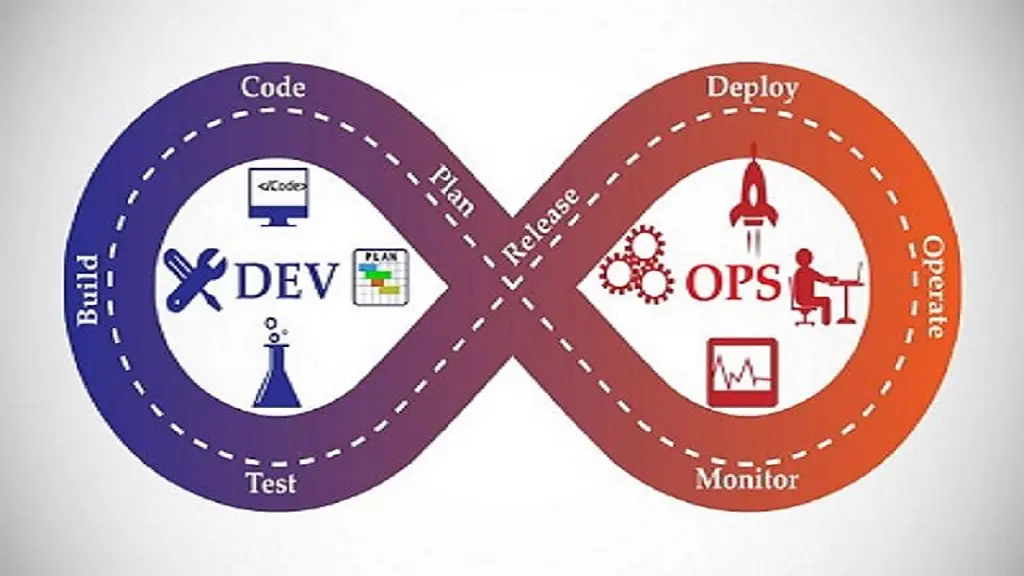
As businesses continue to evolve and demand faster, more efficient software delivery, DevOps has become the backbone of modern software development. With its emphasis on automation, collaboration, and continuous delivery, DevOps has already transformed how organizations manage software development lifecycles. But the future of DevOps is even more exciting, with emerging trends poised to reshape the way teams work and deliver value.
In this blog, we’ll explore the key future trends in DevOps and what you can expect in the coming years. If you’re looking to stay ahead of the curve, taking a DevOps course can equip you with the skills and knowledge needed to succeed in this rapidly changing field.
1. DevSecOps: Security at the Core
As security breaches become more prevalent and costly, the integration of security into DevOps—commonly known as DevSecOps—will play a crucial role in the future. Instead of treating security as an afterthought, DevSecOps involves incorporating security checks into every phase of the development pipeline.
Key Benefits:
- Early detection of vulnerabilities.
- Faster and more efficient responses to security threats.
- Increased trust between development, security, and operations teams.
Future Outlook: Automated security testing and AI-powered threat detection will become integral parts of DevOps pipelines, enhancing security without sacrificing speed.
2. AI and Machine Learning Integration
Artificial Intelligence (AI) and Machine Learning (ML) are transforming industries across the board, and DevOps is no exception. The integration of AI/ML into DevOps processes will enable predictive analysis, intelligent automation, and enhanced decision-making.
How AI/ML Can Impact DevOps:
- Predictive Analytics: Use machine learning to predict failures and optimize resources.
- Automated Testing: AI can reduce manual testing efforts by automating the identification of defects.
- Intelligent Monitoring: AI-powered monitoring tools can detect performance anomalies faster and more accurately than human oversight.
Future Outlook: Expect more tools that leverage AI and ML to provide real-time insights, improve automation, and enable self-healing systems.
3. Shift from CI/CD to Continuous Everything
While Continuous Integration (CI) and Continuous Deployment (CD) have been essential components of DevOps, the future is moving toward Continuous Everything—a framework that not only includes CI/CD but also integrates continuous monitoring, testing, and feedback loops.
Key Components of Continuous Everything:
- Continuous Feedback: Real-time feedback from end-users to guide development efforts.
- Continuous Monitoring: Ongoing observation of system health to improve reliability.
- Continuous Learning: Using data and analytics to inform ongoing improvements in the pipeline.
Future Outlook: Continuous Everything will reduce manual interventions, allowing systems to adapt and self-correct while ensuring higher quality and faster time to market.
4. The Rise of GitOps
GitOps is an operational framework that applies Git’s principles to automate infrastructure deployment and management. By using Git as the single source of truth for infrastructure and applications, teams can simplify and streamline their operations.
Why GitOps is the Future:
- Declarative Configurations: Infrastructure as Code (IaC) allows configurations to be defined, versioned, and controlled in Git repositories.
- Automation and Consistency: GitOps automates infrastructure deployment, ensuring consistency across environments.
- Easier Rollbacks: Since all changes are stored in Git, teams can easily roll back to previous configurations.
Future Outlook: GitOps will continue to gain traction as a leading operational framework, providing greater efficiency, security, and traceability in DevOps workflows.
5. Edge Computing and IoT Integration
With the rise of Edge Computing and the Internet of Things (IoT), DevOps practices will need to adapt to manage the complexities of distributed systems. Traditional DevOps pipelines will need to evolve to support decentralized networks and real-time data processing at the edge.
Key Challenges for DevOps in Edge and IoT:
- Latency and Network Reliability: Real-time processing at the edge requires low-latency solutions.
- Security: More endpoints mean more vulnerabilities, requiring enhanced security measures.
- Scalability: IoT devices and edge systems must be scalable to handle growing demands.
Future Outlook: DevOps teams will focus on creating pipelines that support the unique challenges of edge computing, including real-time deployment and monitoring of distributed systems.
6. Infrastructure as Code (IaC) 2.0
While Infrastructure as Code (IaC) has already revolutionized the way infrastructure is managed, the next generation of IaC—IaC 2.0—will provide even greater control, automation, and flexibility. This includes more advanced tools that allow teams to manage infrastructure declaratively and programmatically.
What’s New with IaC 2.0:
- Self-Healing Infrastructure: Automatically detect and correct infrastructure issues.
- Advanced Declarative Systems: More robust tools for managing complex infrastructure setups.
- Multi-Cloud Support: Easier orchestration across multiple cloud providers.
Future Outlook: IaC 2.0 will provide DevOps teams with more sophisticated ways to manage and scale infrastructure, enabling rapid deployments across cloud environments.
7. Serverless Architecture
Serverless computing is gaining momentum as it simplifies infrastructure management and allows teams to focus solely on writing code. This trend will further accelerate DevOps practices by reducing the operational overhead associated with managing servers and infrastructure.
Key Advantages of Serverless:
- No Server Management: Developers can focus on building applications without worrying about underlying infrastructure.
- Cost Efficiency: Pay only for the compute resources you use.
- Scalability: Serverless platforms like AWS Lambda or Azure Functions automatically scale with demand.
Future Outlook: Serverless will become a core component of DevOps workflows, allowing teams to build and deploy applications faster while reducing infrastructure complexity.
8. Low-Code/No-Code DevOps
The demand for faster software delivery has led to the rise of low-code/no-code platforms, which allow teams to develop and deploy applications with minimal coding. These platforms will soon be integrated into DevOps pipelines, empowering non-developers to contribute to application development.
Benefits of Low-Code/No-Code in DevOps:
- Faster Development Cycles: Applications can be built and deployed rapidly.
- Greater Collaboration: Non-technical team members can contribute to software development.
- Reduced Bottlenecks: Streamline workflows by reducing reliance on specialized developers.
Future Outlook: Low-code/no-code platforms will democratize DevOps, enabling more people across the organization to participate in the software delivery process.
Conclusion
The future of DevOps is incredibly promising, with innovations in AI, automation, security, and infrastructure management on the horizon. Staying informed about these emerging trends is crucial to remaining competitive in an increasingly fast-paced industry. By adopting the latest DevOps practices and continuously upskilling, including taking a DevOps course, you can ensure that your organization is well-prepared for the future.
Investing in learning and professional development will be key to navigating the evolving landscape of DevOps and seizing the opportunities that lie ahead.