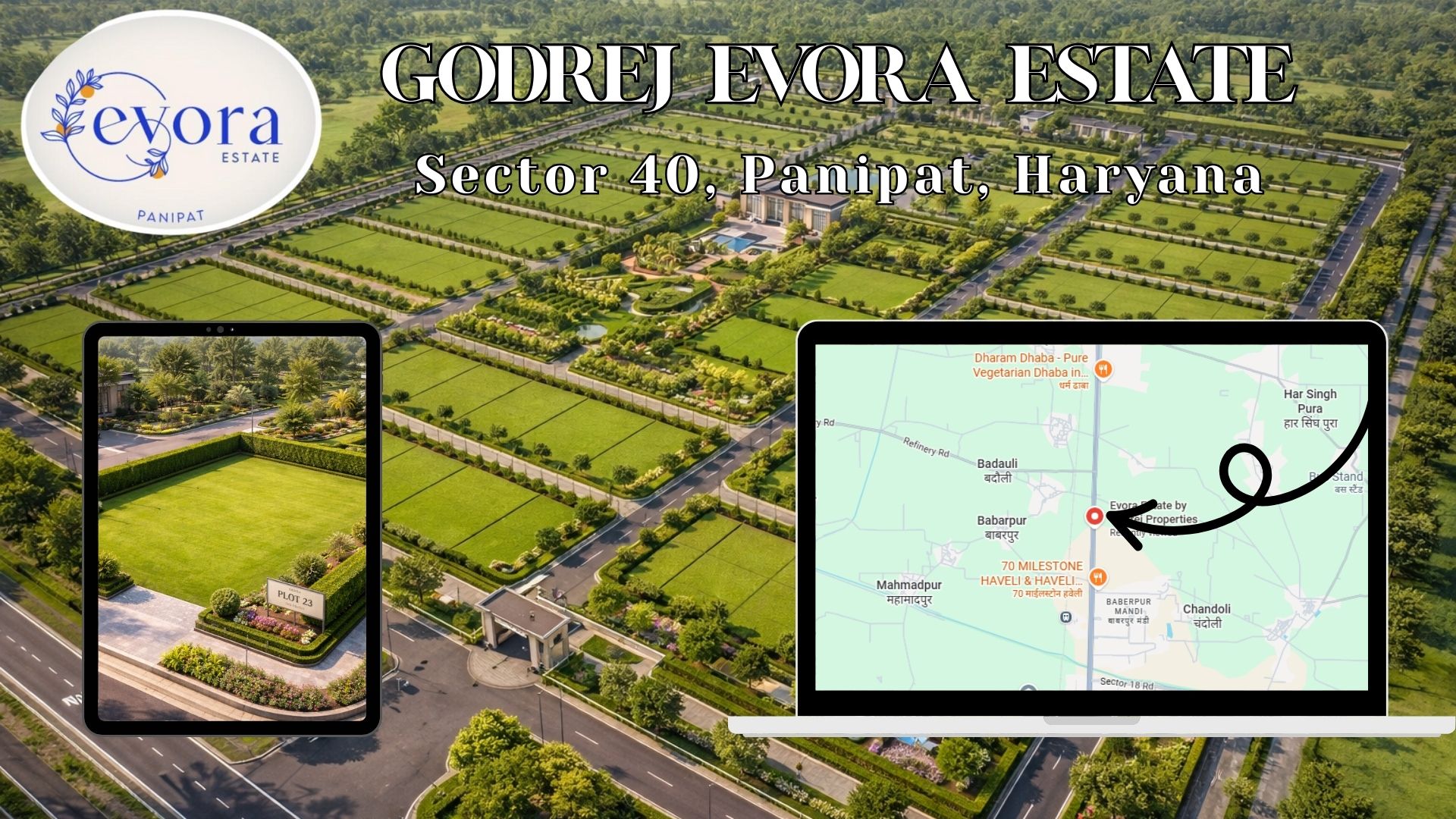
The Godrej plots project at Panipat has moved beyond being only a visual showcase and has gradually taken shape as a thoughtfully planned plotted township under active development. The earlier gallery-focused presentation helped create first impressions through images and layouts, while this follow-up explanation brings clarity to what those visuals truly represent in real-world planning. Buyers evaluating Godrej Plots Panipat often seek deeper understanding, and that understanding develops smoothly when design intent, land planning, and location advantages connect in a meaningful way.
Even though bookings remain open, the project currently stands in a development phase, which means the land is being structured for long-term residential use rather than immediate occupation. That context matters significantly while interpreting layouts, open spaces, and internal road planning shown earlier.
Planning Logic Behind Godrej Evora Estate
The plotted layout under Godrej Evora Estate reflects a planning approach focused on livability rather than crowding. Each visual from the gallery represents zoning decisions that aim to balance privacy, movement, and community interaction. Roads appear wide and well-aligned because traffic circulation has been planned carefully to avoid congestion once construction activity begins.
In contrast to unplanned land parcels seen in many peripheral markets, this project has been structured professionally with clearly defined plot boundaries and service corridors. Green buffers have been placed thoughtfully between residential pockets, and that arrangement supports both visual comfort and environmental balance.
The master plan communicates several important ideas:
-
Residential plots remain distributed evenly instead of clustered densely.
-
Open areas act as breathing zones rather than leftover spaces.
-
Entry and exit points remain limited, which supports safer movement.
-
Utility corridors stay planned underground to maintain visual order.
As a result, the layout conveys discipline and future readiness rather than speculative plotting.
Location Strength and Infrastructure Readiness
Panipat holds strategic relevance within Haryana due to direct access from NH-44, and this connectivity influences long-term value more than short-term price movement. The project location allows smooth travel toward Delhi, Karnal, and surrounding industrial belts, which supports residential demand over time.
In addition, the surrounding locality continues to evolve with better civic planning, and infrastructure expansion has been progressing steadily. Educational institutions, healthcare facilities, and retail zones already operate within reachable distance, while further development remains expected as plotted communities gain occupancy.
Even though physical residences have not yet emerged, internal infrastructure planning remains visible through:
-
Clearly marked internal roads and circulation paths
-
Dedicated zones for utilities and services
-
Defined spaces reserved for recreational use
-
Controlled access points that support security planning
Consequently, the land does not feel speculative but instead appears positioned for structured urban growth.
Interpreting the Gallery With Practical Insight
The earlier gallery visuals served as a guide to understanding scale and layout, while practical interpretation adds confidence to decision-making. Images showing greenery and open roads represent planned outcomes rather than finished reality at this stage. That distinction helps buyers form realistic expectations.
Artist impressions illustrate how homes may look once individual construction begins, while the plotted format allows flexibility in architectural expression. Even though no residences exist currently, the layout allows future homes to integrate smoothly without visual chaos.
Most importantly, the gallery communicates intent rather than completion. That intent becomes meaningful when paired with development-stage clarity, which supports informed planning rather than emotional decisions.
Key Highlights at a Glance
-
Project status remains under development, with plotted land prepared for future residential construction
-
Land area spans a large township-style layout, supporting organized growth
-
Plot sizes typically range between 100 and 180 square yards
-
Internal planning focuses on smooth traffic flow and green buffers
-
Location benefits from NH-44 connectivity and Panipat urban growth
-
Development follows a branded township approach rather than isolated plotting
Similarly, the scale of planning aligns with long-term residential use instead of short-term trading.
Why Plotted Development Appeals in Haryana
Haryana continues to witness growing interest in plotted communities due to flexibility and ownership clarity. In fact, plotted formats allow buyers to plan construction timelines independently while benefiting from township infrastructure. Panipat fits well into this trend because pricing remains relatively accessible compared to core NCR markets.
On the other hand, disciplined developers tend to attract stronger buyer confidence in emerging cities. Brand-backed planning helps reduce uncertainty during early development phases, especially when the project remains under construction.
Significantly, such projects tend to mature gradually, and value appreciation often follows infrastructure completion rather than announcement timelines.
Conclusion
A deeper understanding of Godrej Panipat plots emerges when visual presentation connects with planning logic, location advantage, and development-stage transparency. The project reflects structured intent, thoughtful land use, and long-term residential positioning rather than rushed delivery. As a result, informed buyers gain clarity not only from images but also from how the township has been planned to evolve over time.