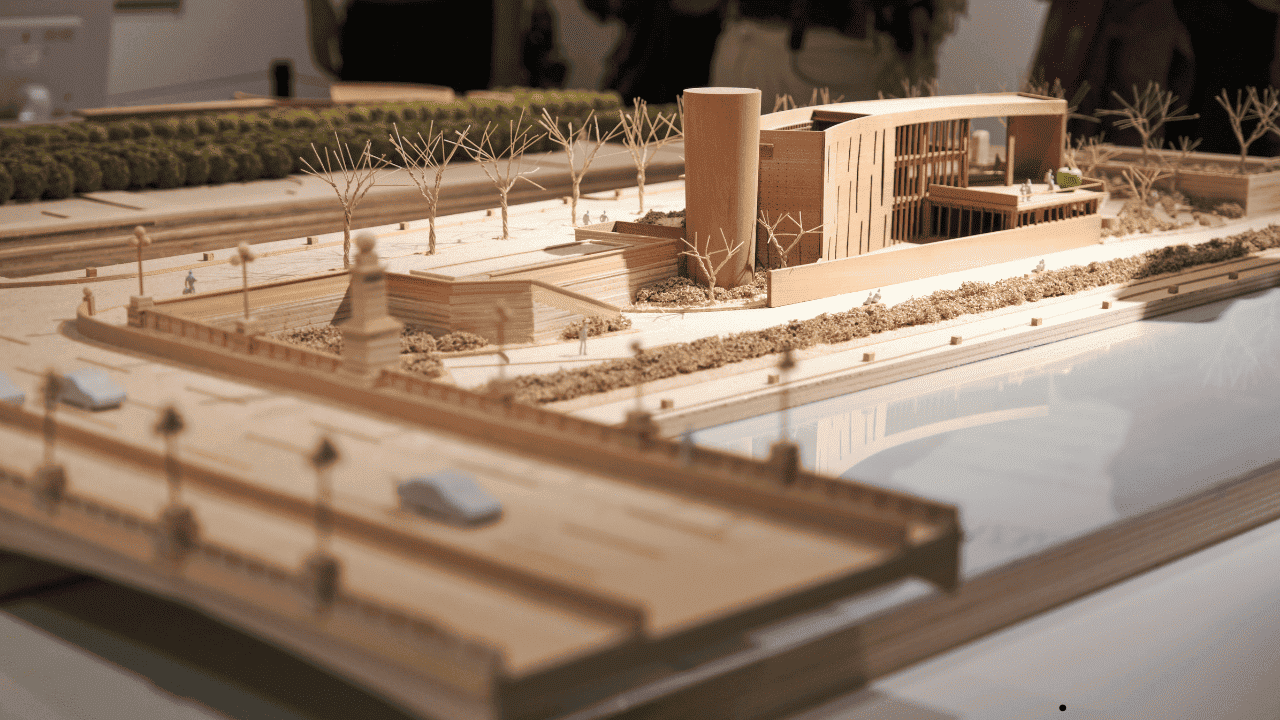
Dubai’s museum exhibitions try to show how older architecture shaped life before rapid modern growth. Exhibitions use physical prototypes to make history easier to visualise. The idea is to help visitors feel older traditions rather than only reading about them.
Historic details, construction logic, and cultural habits are simplified into small forms that are easier to study up close. In this way, visitors understand historic spaces through proportion and massing rather than images alone.
Revealing traditional proportion and spatial planning
Historic architecture in the Gulf relied on climate-responsive layout instead of visual decoration alone. Courtyards, narrow streets, and shading devices were shaped by heat and wind conditions. When people view small prototypes, the environmental logic appears clearer and more readable.
Museum visitors recognise how compact massing protected privacy and moderated temperature in older settlements. These spatial patterns introduce a long architectural timeline that existed before present-day skylines.
Textures that communicate cultural history
Surface appearance helps communicate tradition quickly. Prototypes often imitate gypsum plaster, coral stone, or palm materials. The aim is not perfect replication, but a close suggestion that feels believable. Textured finishes show how traditional walls aged in coastal conditions.
This visual message helps visitors understand how earlier buildings reacted to weather and climate. People develop a stronger sense of heritage when they can observe tactile qualities directly rather than imagining them.
Historic form expressed through landscape and setting
Many heritage districts emerged from coastal trade, which influenced orientation and street width. Others developed inland trading features shaped by desert winds. Exhibition prototypes sometimes include simplified waterfront edges or small streets to show how settlements responded to landscape. When the environmental setting is included, visitors see how design choices evolved from practical needs and cultural behaviour rather than abstract aesthetic taste.
Cultural interpretation through curated display
Curators often use controlled lighting, guided notes, and short captions to help people read historic form accurately. Light direction highlights wall thickness, shade devices, and the ratio of solid surfaces to openings. Captions explain construction customs and regional climate adaptation. These display methods help prototypes communicate heritage without long text panels. The focus remains on spatial understanding rather than academic narration.
The role of architectural scale models in preserving memory
The term architectural scale models Dubai remains central because prototypes translate lost history into visible representation. Older buildings sometimes no longer survive in full form, but model displays help assemble knowledge from photography, excavation, and archival drawings. When visitors observe miniature districts, they gain a three-dimensional memory of a cultural past that is difficult to imagine through drawings alone.
Bridging historic context with modern museum practice
Today’s museum practice mixes narrative and physical demonstration. Prototype displays allow designers to combine culture, environment, and construction detail into a single reading experience. This helps Dubai museums present architectural history as something evolving instead of frozen in time. By studying earlier buildings, today’s designers learn how traditional spaces managed climate without advanced mechanical systems. These comparisons show design intelligence developed long before modern technology.
Adapting traditional cues in contemporary interpretation
The second use of architectural scale models is found in reinterpretation rather than documentation. Some museum prototypes intentionally simplify heritage forms but keep the fundamental proportion, shading logic, or material character. This type of interpretation teaches visitors that historical architecture was more than façade decoration. It was responsive design built with environmental awareness and cultural intention.
Public engagement through physical form
People engage more strongly with objects they can walk around. Prototypes allow viewers to stand close, change perspective, and observe detail from different angles. Photography and text can show information, but physical form teaches through scale and presence. Museum visitors develop a personal connection with historic places because they move around the object instead of only looking at a screen.
Supporting research and educational awareness
The third role of architectural scale models appears in research and education. Students, historians, and designers use prototypes to study proper proportion, structural logic, and urban organisation. When museums encourage discussion around displayed prototypes, knowledge becomes shared. This opens space for cultural appreciation among various age groups and backgrounds.
Conclusion
Historic form is more than old style. It reflects climate, community, and spatial lifestyle. Museum prototypes allow the public to recognise these values in a clear and physical manner. Through curated lighting, material suggestions, and environmental context, architectural scale models make heritage visible and understandable for present and future generations.