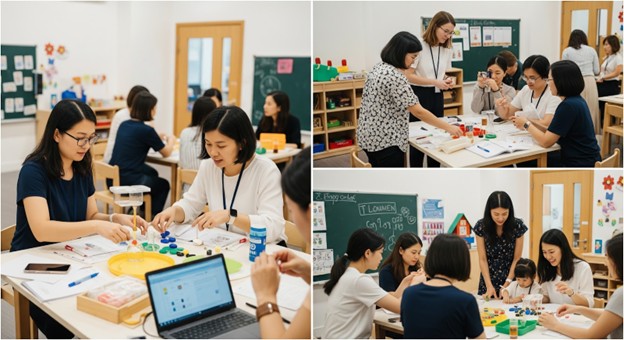
You want young kids excited about learning and teachers feeling inspired again. You also want something practical you can run this term, not a theory you’ll file away. That’s where well-designed workshops for preschool teachers in Singapore shine. They blend joyful, hands-on activities for children with fresh, ready-to-use strategies for your team.
Today,, you’ll see how these workshops energise classrooms, support teacher growth, and bring parents into the learning journey. You’ll also get simple planning cues you can apply right away. Take a breath. You’re about to make learning feel alive.
Feel the Spark: Why Preschool Workshops Change Everything
You care about impact. Kids should leave a session buzzing with ideas, and your teachers should walk out with techniques they can use tomorrow. A strong workshop delivers both. It turns play into purposeful practice and transforms everyday moments into learning gains you can see.
You’ll notice children building language, motor skills, and social confidence without pressure. You’ll also notice teachers experimenting with new prompts, new materials, and fresh ways to spark curiosity. That mix matters. When children and educators grow together, your program grows too.
These sessions also build momentum for your curriculum. You get activity frameworks that repeat well, clear goals, and a shared playbook your staff can use across themes. Over time, that consistency builds a culture of creativity where everyone knows how to set kids up for wins that add up.
See Learning Come Alive: Activities That Spark Joy and Skills
Children learn best when their hands are busy and their minds feel safe to explore. A good workshop should give them both. Keep activities short, sensory, and open-ended so kids can try, test, and try again. That is how they build resilience and pride in their work.
Bring in living things they can care for. A mini aquarium draws curious eyes. A mudskipper or stick insect setup shows that science is real and close. Terrariums and carnivorous plant jars invite conversations about needs, habitats, and changes over time. You’ll hear new words, new questions, and new stories during circle time.
Add art that they can own. Shell painting, simple clay creatures, and group murals encourage kids to express feelings and ideas. Fine-motor practice happens quietly while creativity leads the way. Children learn to share tools, wait their turn, and cheer for one another’s efforts. Those are the habits that make classrooms calm and kind.
Close with storytelling and pretend play. Puppets, props, and role-play help children build language, take on different roles, and gain confidence in front of peers. You can support early literacy by adding name cards, labels, and picture prompts that kids can touch and move. It feels like play, and it is, but it also builds strong foundations.
Teach With Heart: How Workshops Lift You and Your Team
You want professional development that respects your time. Workshops give you strategies in action, not slides you’ll never open again. You’ll try new prompts, see how children respond, then refine in the moment. That loop builds skill faster than any manual.
You’ll also strengthen relationships. When you join the floor and create alongside your children, trust deepens. Students see you as a partner in discovery. You see them more clearly, including the quiet child who blossoms when handed a paintbrush or a magnifier. Those insights carry back into your daily plans.
Workshops serve as preschool teaching professional development. They expose you to creative teaching methods for early childhood, provide practical tools for observing progress, and even offer new classroom management strategies for preschool that keep sessions smooth without losing joy. In Singapore, many align with early childhood educator training in Singapore, giving your staff skills that meet local expectations while keeping the spark alive.
Planning becomes lighter too. A well-run workshop leaves you with ready-to-use activity cards, supply lists, safety notes, and adaptation ideas for children with different needs. Each activity ties neatly to outcomes and observation points. Over the term, that structure supports consistency while still leaving room for play.
If you lead a centre, you’ll value the ripple effect. Shared training creates a common language for coaching, peer support, and reflection. Staff feel supported and confident. Families see the difference. Retention improves when teachers have tools that work and a community that cares.
Parents Welcome: Build Community Around Learning
When parents join a session, children light up. You’ll see shy kids try new tasks and outgoing kids become thoughtful helpers. The message is clear. Learning is a team effort, and your centre is a safe place for families to connect.
If you run public or community workshops, set expectations early. Let parents know they’re welcome and that a small accompanying fee applies where relevant, such as a modest per-adult rate to cover materials and staffing. That step helps you manage numbers and keeps the session smooth for everyone.
Shared memories count. A parent and child building a terrarium or painting a shell together will talk about it at home and remember it long after. That story strengthens family support for your program. It also gives teachers a warm way to start future conversations about progress and interests.
Extend that spirit to schools and daycare centres. Offer custom sessions for teachers seeking workshops for preschool teachers in Singapore. Keep the options flexible. Some will want nature setups, others will lean toward art, and some will prefer a mix that fits their space and timetable.
Plan It Right: Your Simple Blueprint for a Workshop That Works
You do need a plan that respects short attention spans and supports different learners. Use this blueprint and adjust as you discover what your group enjoys most.
- Define one clear outcome. Keep it simple so your team can coach toward it.
- Design a sensory flow. Welcome, demo, activity, share. That rhythm keeps energy steady.
- Prepare materials for small hands. Pre-portion, label, and simplify to support independence.
- Build in choice and guidance. Provide easy and stretch options to help confidence grow.
- Train your team inside the session. Rotate roles to spread practice.
- Invite families with clear notes. Share age suitability, fees for adults, and activity themes.
- Offer add-on experiences. Add stick insects, mudskippers, or carnivorous plants for variety.
- Close with reflection and a take-home. Ask “What did you try?” and send a simple card home.
Workshops like these are more than activities for kids. They also function as hands-on learning workshops for teachers where you model, practice, and refine teaching in real time.
Conclusion
You want workshops that excite children, empower teachers, and bring families closer to your centre. You can achieve that with sessions that are playful, purposeful, and simple to run. Start with one clear outcome, design a flow that works, and give your team space to learn alongside kids.
When learning feels alive, everyone grows. That is the power of workshops for preschool teachers in Singapore. They energise classrooms today and set brighter paths for tomorrow.