Warsaw, Poland’s capital, is a city of resilience and transformation. Known as the “Phoenix City,” it rose from the ashes after being almost entirely destroyed during World War II. Today, it stands as a vibrant metropolis where history meets modernity, and tradition blends with innovation. From its beautifully reconstructed Old Town to its dynamic cultural scene, Warsaw offers a fascinating journey through time and a glimpse into Poland’s rich heritage. Let’s explore some of the city’s must-see landmarks, cultural highlights, and culinary delights.
A Walk Through Warsaw’s Old Town
Begin your exploration in Warsaw’s Old Town, a UNESCO World Heritage site that was meticulously rebuilt after WWII. The stunningly restored Market Square is the heart of this area, with colorful townhouses and charming cobblestone streets. As you wander, take in the beauty of St. John’s Archcathedral and the impressive Royal Castle, once home to Polish monarchs. The castle’s ornate interiors, including the famous Canaletto Room, offer a peek into the country’s royal past.
In the middle of the square, you’ll find the iconic Mermaid of Warsaw statue, a symbol of the city’s spirit. Legend has it that this mythical creature guards the city, a fitting metaphor for Warsaw’s survival and resurgence.
Discovering the Royal Route
From the Old Town, take a stroll along the Royal Route, one of Warsaw’s most picturesque avenues. This historic route connects the Royal Castle with Łazienki Park and Wilanów Palace, both of which are royal residences that speak to the city’s grand past.
Along the way, stop at Krakowskie Przedmieście, a bustling street lined with historic buildings, churches, and monuments. You’ll pass by the Presidential Palace, Warsaw University, and the Church of the Holy Cross, where the heart of Poland’s most famous composer, Fryderyk Chopin, is interred. The route offers a blend of old-world charm and modern vibrancy.
Łazienki Park: A Royal Escape
Further down the Royal Route, you’ll find Łazienki Park, one of the most beautiful green spaces in the city. This sprawling park is home to the Palace on the Isle, a neoclassical gem surrounded by water and gardens. The palace’s elegant rooms house a collection of paintings and sculptures, offering a peaceful retreat from the city’s hustle and bustle.
During the summer months, you can enjoy free Chopin concerts in the park, a tribute to Poland’s beloved composer. Whether you’re relaxing by the lake or exploring the park’s many paths and statues, Łazienki offers a serene escape steeped in history.
Warsaw Uprising Museum: A Story of Resistance
No visit to Warsaw would be complete without understanding the city’s resilience during WWII. The Warsaw Uprising Museum offers a powerful and emotional look at the 1944 uprising against Nazi occupation. Through immersive exhibits, photographs, and personal stories, the museum brings to life the struggles and sacrifices of the people who fought for their city.
The museum’s layout is designed to reflect the chaos and determination of the time, with reconstructed sewers, film footage, and even a replica of a B-24 Liberator bomber. It’s a moving reminder of Warsaw’s enduring spirit and the cost of freedom.
Modern Warsaw: Skyscrapers and Innovation
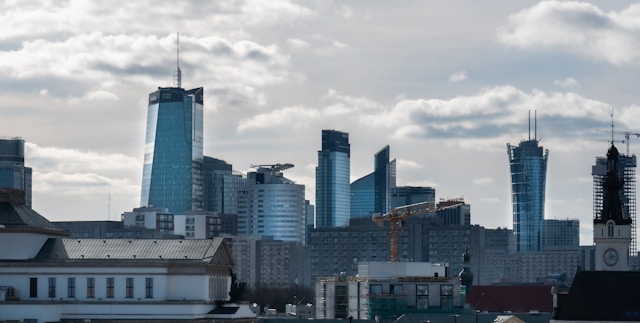
While Warsaw’s history is ever-present, the city is also a symbol of modernity and growth. The skyline, dominated by towering skyscrapers like the Palace of Culture and Science—a gift from the Soviet Union—is a striking contrast to the city’s historic landmarks. The Palace, once a symbol of communist rule, now houses theaters, museums, and an observation deck offering panoramic views of Warsaw.
The nearby Warsaw Spire and Złota 44 buildings represent the city’s transformation into a major European business hub. Warsaw’s blend of old and new, with futuristic architecture standing alongside historic monuments, makes it one of the most dynamic capitals in Central Europe.
Tasting Warsaw: Traditional Polish Cuisine
No journey through Warsaw is complete without experiencing its culinary offerings. Polish cuisine is hearty, comforting, and deeply rooted in tradition. Start your gastronomic adventure with a bowl of żurek, a sour rye soup often served with sausage and egg. For the main course, try pierogi, Poland’s famous dumplings filled with anything from potato and cheese to mushrooms and meat.
For a taste of local street food, stop by a bar mleczny (milk bar), a type of cafeteria that serves inexpensive, traditional Polish dishes. Here, you can try classics like bigos (hunter’s stew), kielbasa (sausage), and placki ziemniaczane (potato pancakes) at an affordable price.
End your meal with something sweet, like sernik (Polish cheesecake) or pączki (Polish doughnuts), paired with a glass of compote or a shot of Polish vodka.
Beyond the City: Day Trips from Warsaw
If you have extra time, consider taking a day trip to explore more of Poland’s history and nature. Just an hour’s train ride from Warsaw is Żelazowa Wola, the birthplace of Fryderyk Chopin. The Chopin Museum and his childhood home are surrounded by beautiful gardens, making it a peaceful retreat for classical music lovers.
Another fascinating destination is Kampinos National Park, a vast nature reserve where you can hike through forests, spot wildlife, and even explore some WWII memorial sites.
Conclusion
Warsaw’s story is one of revival and resilience, where the past and present coexist harmoniously. Whether you’re exploring its reconstructed Old Town, walking along the Royal Route, or experiencing the city’s vibrant modern side, Warsaw offers a journey that’s both inspiring and unforgettable.
For those looking to explore Warsaw and beyond, travel agencies like Roomchai Limited, as well as local services like Warsaw City Tours and Polish Adventures, can help tailor an experience that immerses you in the very best of Poland’s capital.