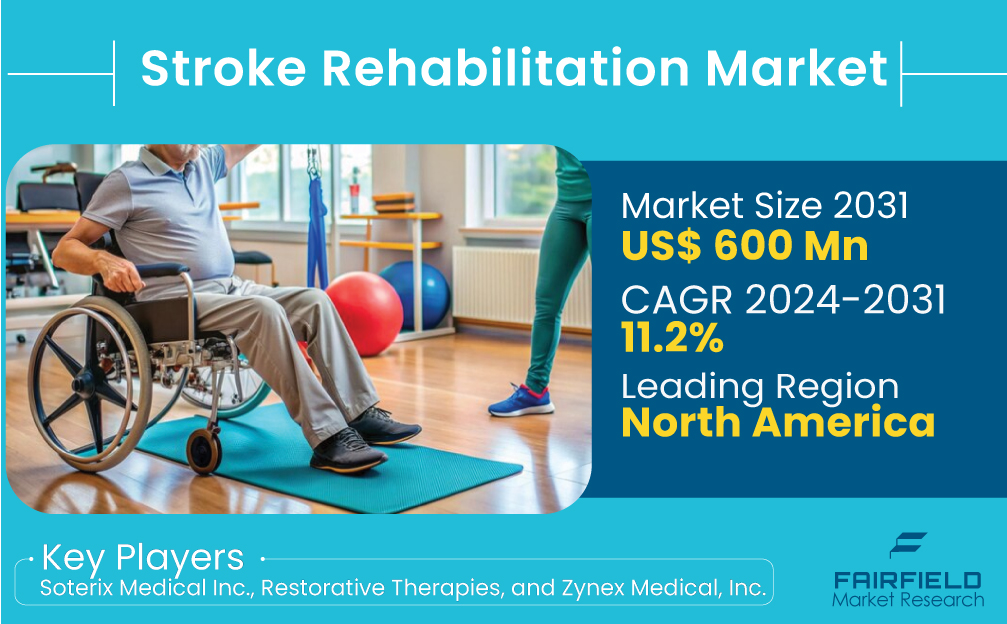
The global stroke rehabilitation market is poised for substantial growth, with its value expected to reach US$600 Mn by 2031, up from US$285 Mn in 2024. This impressive trajectory represents a remarkable CAGR of 11.2% from 2024 to 2031. This press release explores the factors driving the costs of stroke rehabilitation and the market’s growth dynamics.
Stroke Rehabilitation Market Insights
The shift toward patient-centric healthcare models, particularly in home-based rehabilitation, is becoming a key trend. Home-based rehabilitation offers patients convenience and cost savings. Ischemic stroke patients, who constitute 87.3% of stroke survivors, are among the primary beneficiaries of this approach.
However, hospitals remain the dominant end users for stroke rehabilitation medications and devices, projected to reach a value of US$5,859.9 Mn by 2024. The primary challenge facing the market is inconsistent reimbursement policies, which may deter investment in newer technologies. Additionally, a shortage of skilled professionals may hinder effective rehabilitation services, leading to extended recovery times and suboptimal outcomes.
Key Growth Determinants
Increasing Prevalence of Stroke
The global prevalence of stroke is a significant driver of market growth. According to the World Health Organization (WHO), stroke remains one of the leading causes of death and disability worldwide. The rising aging population, combined with lifestyle factors such as obesity and hypertension, has led to an increase in stroke cases, creating a higher demand for rehabilitation services.
Technological Advancements
The integration of advanced technologies, such as robotic-assisted devices, virtual reality (VR) systems, and tele-rehabilitation, is reshaping stroke rehabilitation. These innovations enhance therapy effectiveness by providing real-time monitoring and therapy adjustments. AI-powered rehabilitation is also gaining momentum, further driving market expansion.
Growing Demand for Home-Based Rehabilitation
Home-based rehabilitation solutions are becoming increasingly popular due to the shift toward patient-centric care. This trend allows stroke survivors to receive therapy in the comfort of their homes, reducing travel costs and offering convenience. As the global population continues to age, demand for these services is expected to rise significantly.
Key Growth Barriers
Lack of Skilled Professionals
One of the primary barriers to market growth is the shortage of trained professionals in stroke rehabilitation. The complexity of stroke recovery necessitates a multidisciplinary approach involving specialists such as physical therapists, occupational therapists, and neurologists. A lack of skilled practitioners can result in substandard rehabilitation services, affecting patient recovery rates.
High Costs of Rehabilitation Services
The cost of advanced rehabilitation services, including robotic devices and VR systems, remains high. This financial burden can limit access to necessary rehabilitation programs, especially for smaller healthcare facilities and patients, thereby impacting market expansion.
Stroke Rehabilitation Market Trends and Opportunities
Rise of Virtual Reality in Rehabilitation
Virtual reality is emerging as a vital tool in stroke rehabilitation, offering immersive, interactive environments that enhance patient motivation and engagement. This technology allows for customized therapy sessions tailored to individual recovery needs, promoting faster recovery and improved outcomes.
Expansion of Tele-Rehabilitation Services
Tele-rehabilitation services, which surged in popularity during the COVID-19 pandemic, are providing stroke survivors with greater access to remote therapy. This trend is expected to continue, with wearable devices and mobile health applications enhancing real-time feedback and personalized interventions.
Regional Analysis
North America
North America is projected to dominate the stroke rehabilitation market, with an estimated value of US$7,862 Mn by 2024, driven by evidence-based rehabilitation techniques that leverage neuroplasticity for recovery. The U.S. will account for 90.2% of the regional market, with its robust network of rehabilitation centers leading innovation.
East Asia
East Asia is set to experience rapid growth, with the market expected to reach US$2,985 Mn by 2024. China is leading the region, contributing 41% of regional revenue, fueled by government initiatives and rising stroke prevalence. The market in China is anticipated to grow at a CAGR of 12.4%, reaching US$3,719 Mn by 2031.
Competitive Landscape
Key players in the stroke rehabilitation market include Penumbra, Inc., Saebo Inc., DJO Global, and BIONIK Inc., among others. These companies are focusing on developing advanced technologies, such as robotic therapy devices and wearable solutions, to enhance stroke recovery. MicroTransponder’s 2021 launch of the Vivistim Paired VNS system marked a significant innovation in stroke recovery, positioning the company as a leader in rehabilitation technology.
Key Market Segments:
By Product:
- Electrical Stimulators (Table Top, Wearable)
- Robotic Stimulators
- Wireless Stimulators
- Non-Invasive Stimulators
- Cognitive Stimulators
By Stroke:
- Ischemic Stroke
- Hemorrhagic Stroke
- Transient Ischemic Attack
By End User:
- Hospitals
- Specialty Clinics
- Ambulatory Surgical Centers
- Long Term Treatment Centers
- Home Care Settings
- Rehabilitation Centers
By Region:
- North America
- Europe
- Asia Pacific
- Latin America
- The Middle East and Africa
For More Information Visit: https://www.fairfieldmarketresearch.com/report/stroke-rehabilitation-market