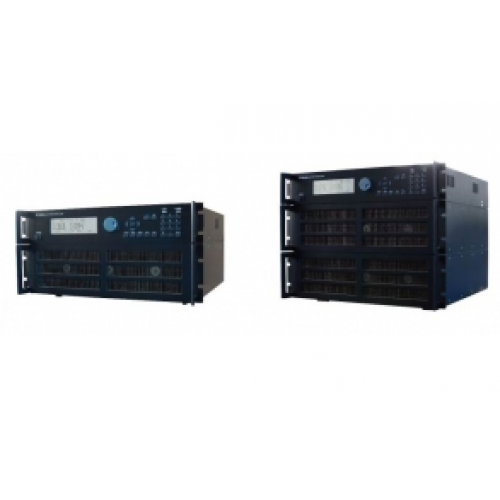
In modern labs focused on electronics testing, a programmable DC electronic load is an essential tool. From power supply testing to battery discharge analysis, programmable DC loads are used to simulate a wide range of real-world scenarios. But with numerous options available, how do you choose the best programmable DC electronic load for your lab? This guide will answer the key questions you need to consider and help you make an informed decision.
Why Do You Need a Programmable DC Electronic Load in Your Lab?
Programmable DC electronic loads are invaluable for testing various DC power sources, such as batteries, power supplies, fuel cells, and solar panels. These loads allow you to simulate different load conditions—such as constant current (CC), constant voltage (CV), and constant power (CP)—so you can evaluate how a power source performs under real-world conditions. The programmable nature of the device allows you to control and fine-tune the load for precise measurements.
Whether you’re conducting product development, research, or quality control, programmable DC electronic loads offer flexibility, accuracy, and reliability in your testing process.
Key Considerations When Choosing a Programmable DC Electronic Load
To select the right programmable DC electronic load for your lab, there are several factors to consider. Below, we break down the most important features and specifications to keep in mind when making your decision.
1. Voltage and Current Range
The first and most important factor to consider is the voltage and current range of the programmable DC load. This will determine the types of devices you can test and the load conditions you can simulate.
- Voltage Range: Make sure the load can handle the maximum voltage of the devices you plan to test. Choose a load with a voltage range that comfortably exceeds your requirements.
- Current Capacity: Similarly, the load should be able to draw enough current to simulate real-world operating conditions. Ensure that the current capacity meets or exceeds the demands of your testing equipment.
2. Power Rating
The power rating of the programmable DC load refers to the total power (measured in watts) that it can dissipate. The power rating is critical because it determines the overall capacity of the load in terms of energy absorption.
- High-Power Applications: If you are testing devices like large power supplies or batteries, you’ll need a load with a higher power rating to handle the energy they generate.
- Low-Power Applications: For smaller devices like sensors or microcontrollers, a lower power rating may suffice. However, it’s always a good idea to have a load with a slightly higher capacity than you expect to need.
3. Operating Modes (CC, CV, CP, CR)
Most programmable DC electronic loads offer several operating modes. Understanding these modes is crucial because different testing scenarios will require different modes of operation.
- Constant Current (CC) Mode: The load draws a constant current, regardless of changes in input voltage. This mode is ideal for battery discharge testing and evaluating current-limited power supplies.
- Constant Voltage (CV) Mode: In this mode, the load maintains a constant voltage while adjusting the current. It’s useful for applications like solar panel testing and voltage regulation analysis.
- Constant Power (CP) Mode: The load adjusts both current and voltage to maintain a consistent power draw. CP mode is typically used for power supply testing and efficiency evaluations.
- Constant Resistance (CR) Mode: This mode simulates a fixed resistance, where the current and voltage vary accordingly. CR mode is useful for simulating resistive loads in real-world applications.
4. Resolution and Accuracy
In laboratory settings, precision is paramount. The resolution and accuracy of your programmable DC electronic load are critical for obtaining reliable data, especially when testing sensitive equipment like batteries or power supplies.
- High Resolution: The ability to finely adjust the load settings and measure small changes in current, voltage, or power is essential for accurate testing.
- Accuracy: Look for a load that offers high precision in measurements. Accuracy is particularly important in applications such as battery testing, where even minor fluctuations in performance need to be captured.
5. Cooling Mechanism
As programmable DC electronic loads dissipate energy as heat, an efficient cooling system is critical for long-term reliability and performance. Loads with inadequate cooling mechanisms can overheat, which may damage both the load and the devices under test.
- Active Cooling: Most high-power DC loads use fans or other active cooling methods to dissipate heat. Ensure that the cooling system is sufficient for the power rating of the load.
- Temperature Monitoring: Some loads come with built-in temperature sensors that monitor heat dissipation and prevent overheating. This is a valuable feature for ensuring safe and efficient operation.
6. Communication and Automation
Many modern programmable DC electronic loads offer communication interfaces for remote control and automation. These features are essential for integrating the load into automated testing environments, allowing for greater efficiency and accuracy.
- USB, GPIB, RS232, LAN: Check if the load supports the communication interfaces you need for remote operation and data collection.
- Automation and Scripting: Some programmable loads allow for automated testing through software integration, making it easier to perform repetitive tests without manual intervention.
7. User Interface and Display
The ease of use of a programmable DC electronic load is largely determined by its user interface. A clear, intuitive display can significantly improve the testing experience, making it easier to configure and monitor load conditions.
- Touchscreen Displays: Many modern loads come equipped with touchscreen displays, which simplify navigation and make it easier to adjust settings on the fly.
- Real-Time Data: Choose a load that provides real-time data feedback on current, voltage, and power levels. This is especially important when running complex or long-term tests.
Top Reasons to Choose a Programmable DC Load for Your Lab
A programmable DC electronic load offers several advantages over fixed or traditional loads. Here’s why you should consider investing in one for your lab:
- Flexibility: Programmable loads allow you to simulate various load conditions, making them ideal for a wide range of testing scenarios.
- Precision and Control: These loads provide greater control over test parameters, ensuring that you can carry out precise and repeatable tests.
- Automation Capabilities: With communication interfaces and software integration, programmable loads make it easier to automate testing processes.
- Time Savings: The ability to quickly switch between different load conditions reduces the time spent on manual adjustments and trial-and-error testing.
Conclusion
Choosing the best programmable DC electronic load for your lab involves understanding the specific requirements of your testing applications. Consider factors like voltage and current range, power rating, operating modes, accuracy, and communication capabilities when making your decision. By selecting the right programmable DC load, you can enhance the accuracy, flexibility, and efficiency of your testing process, ensuring reliable data and faster results in your lab.<
For more information and to explore a range of programmable DC electronic loads, visit Technical Products.