


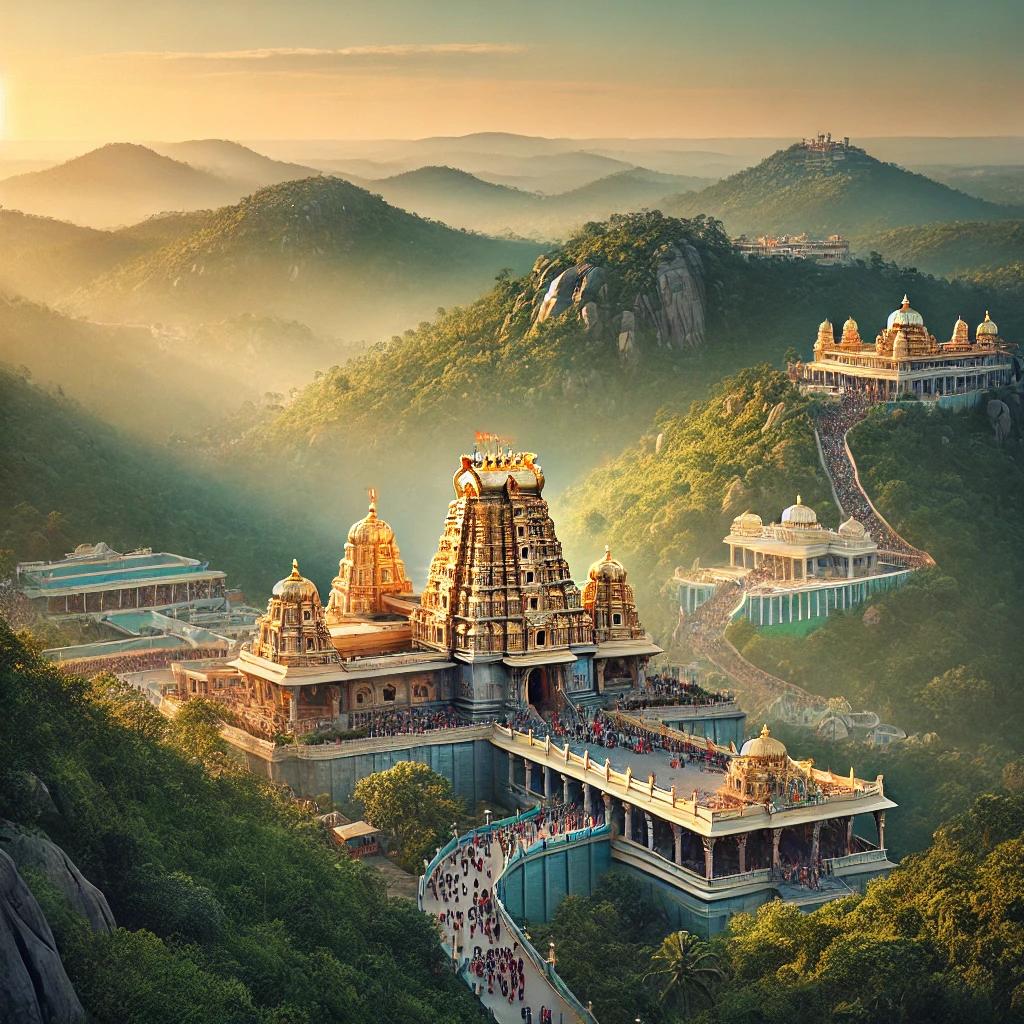
Tirupati, one of the most visited pilgrimage destinations in the world, is a sacred town nestled in the lush green hills of Tirumala. For millions of devotees, the Sri Venkateswara Temple at Tirumala is not merely a site of worship but a sanctuary where they seek divine blessings, spiritual solace, and the fulfillment of their deepest desires.
Behind this temple’s allure lies the powerful mythology of Lord Venkateswara, an incarnation of Lord Vishnu, who descended to earth to guide devotees through the struggles of Kali Yuga. Let’s explore the rich spiritual history and the timeless legends that have made Tirupati a beacon of faith for centuries.
The Legend of Lord Venkateswara: Vishnu’s Avatar for Kali Yuga
The central story of Lord Venkateswara begins with the cosmic imbalance caused by Kali Yuga, the current age of moral decline, greed, and spiritual erosion. The legend tells us that the gods, observing the rise of evil forces and the suffering of humanity, sought the intervention of Lord Vishnu, the protector and preserver of the universe.
In response, Lord Vishnu descended to earth as Venkateswara, choosing the Tirumala hills as His abode. His purpose was to protect humanity, restore righteousness, and guide devotees through the dark times of Kali Yuga. Thus, the temple of Lord Venkateswara became a sacred space where the divine and human realms intersect, offering pilgrims a chance to seek refuge and redemption.
The Union of Earth and Heaven: Venkateswara and Padmavathi Devi
A key part of Lord Venkateswara’s mythology is His marriage to Padmavathi Devi, the earthly incarnation of Goddess Lakshmi. According to the legend, Goddess Lakshmi left Vaikuntha, Vishnu’s celestial abode, after a dispute and descended to earth. She was reborn as Padmavathi, the daughter of a Chola king.
Lord Venkateswara, in search of His consort, also descended to earth and took up residence in the Tirumala Hills. After a divine series of events, the two were united in marriage, symbolizing the cosmic union of the divine protector and the goddess of wealth and prosperity. The marriage of Lord Venkateswara and Padmavathi is celebrated every year in Tirupati with the Padmavathi Brahmotsavam, a grand festival attracting thousands of devotees.
This story emphasizes the balance between the spiritual and material worlds, showing how devotion to the divine brings both worldly prosperity and spiritual fulfillment.
The Sacred Geography: The Significance of Tirumala’s Seven Hills
The physical setting of the Tirumala Hills, also known as Sapthagiri (Seven Hills), plays a pivotal role in the spiritual significance of the temple. These seven hills are believed to represent the seven heads of Adisesha, the divine serpent upon which Lord Vishnu reclines in Vaikuntha.
Each of the hills is considered sacred, with the highest, Venkatadri, being the most revered as it holds the Sri Venkateswara Temple. Climbing the seven hills, especially via the Alipiri Mettu or Srivari Mettu footpath routes, is viewed as a sacred act of devotion. Many pilgrims undertake this journey barefoot, as an act of penance and spiritual purification. Every step taken up these hills is believed to draw devotees closer to the divine presence of Lord Venkateswara, cleansing their minds and souls.
The Debt to Kubera: A Cosmic Lesson in Charity and Devotion
One of the most intriguing stories associated with Lord Venkateswara is His loan from Kubera, the god of wealth. It is said that in preparation for His grand wedding with Padmavathi Devi, Lord Venkateswara borrowed a large sum of wealth from Kubera, with the promise that He would repay it over time.
To this day, devotees believe that the offerings made at the temple go toward repaying this divine loan. This myth underscores the concept of cosmic debt and the importance of dana (charity). By donating to the temple, devotees are not only contributing to the upkeep of the temple but also participating in the cosmic balance, reminding themselves that material wealth is temporary, while spiritual wealth is eternal.
The Power of Darshan: A Transformative Spiritual Experience
For the millions of pilgrims who visit the Sri Venkateswara Temple, the ultimate goal is to receive darshan, or a glimpse of the deity. The darshan of Lord Venkateswara is believed to be a moment of profound spiritual transformation. Even the briefest view of the Lord’s idol is said to cleanse one’s past sins and bring forth blessings of health, wealth, and spiritual fulfillment.
The sight of Lord Venkateswara’s intricately adorned idol, with His compassionate yet powerful gaze, fills devotees with a sense of peace and reassurance. It is this powerful connection with the divine that keeps millions of devotees returning to Tirupati year after year, often traveling great distances and enduring long waits just to experience this divine moment.
Tirupati Laddu: More Than Just a Prasadam
The Tirupati Laddu, a sweet offering distributed as prasadam at the temple, has its own spiritual significance. The laddu is more than just a food item; it carries the blessings of Lord Venkateswara. Devotees believe that receiving the laddu brings divine favor and that sharing it with loved ones spreads the Lord’s blessings to others.
The preparation of the laddus follows strict religious protocols, with dedicated kitchens and temple staff ensuring that every laddu is made with devotion. This prasadam has become an iconic symbol of Tirupati, and many devotees consider it a sacred reminder of their spiritual journey to the temple.
Tirupati: A Place of Eternal Spiritual Power
Beyond the rituals, legends, and festivals, the true spiritual significance of Tirupati lies in the unwavering faith of its devotees. The mythology of Lord Venkateswara continues to inspire millions, serving as a reminder that the divine is always present to guide, protect, and uplift those who seek Him with a pure heart.
For devotees, the pilgrimage to Tirupati is more than a religious obligation; it is a journey toward inner peace, divine blessings, and spiritual enlightenment. Whether it’s the long trek up the Tirumala Hills, the offering of hair as a symbolic gesture of surrender, or the simple act of gazing at the deity during darshan, every experience in Tirupati is infused with deep spiritual meaning.
Conclusion: Tirupati—Where Faith Meets the Divine
Tirupati is not just a temple; it is a spiritual powerhouse where myths come to life and faith meets the divine. The mythology of Lord Venkateswara speaks of protection, devotion, and the delicate balance between the material and the spiritual. For millions of devotees, a visit to the Tirumala temple is not just about seeking blessings; it is about experiencing the profound connection between the earthly and the divine.
Through its rich traditions, fascinating myths, and the powerful presence of Lord Venkateswara, Tirupati remains a place of timeless spiritual significance, offering hope, guidance, and divine blessings to all who enter its sacred hills.


