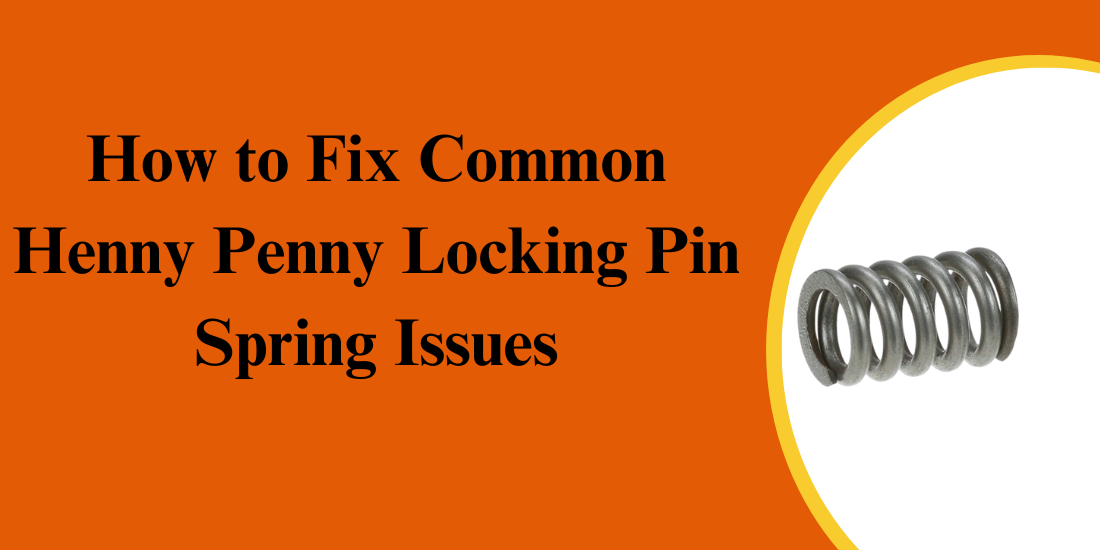
Operating a commercial kitchen demands attention to detail, and ensuring all equipment functions properly is essential for efficiency and safety. One crucial yet often overlooked component in your Henny Penny fryer is the Spring Locking Pin. This small but vital part secures the fryer’s lid or basket during operation. Over time, however, the Spring Locking Pin can wear out or become damaged, leading to performance issues. In this guide, we’ll explore common causes behind these problems, offer practical fixes, and provide tips to prevent future complications with your Spring Locking Pin.
Common Causes of Henny Penny Locking Pin Spring Issues & Fixes
Here are the common causes of Henny Penny Spring Locking Pin issues and practical solutions to fix them.
1.Locking Pin Feels Loose or Wobbly
A loose or wobbly locking pin is often due to a weakened spring that has lost its tension. Misalignment of the locking mechanism can also contribute to this issue. Springs naturally degrade with continuous use, leading to instability.
Fix:
- Examine the Spring and Pin: Ensure that the two components are well aligned. If the spring appears stretched or worn, it should be replaced.
- Re-align or Replace: If the locking mechanism is misaligned, try to realign it gently. If the spring no longer provides enough tension, install a new one to restore secure locking.
2.Difficulty Engaging or Disengaging the Locking Pin
One of the causes of a locking pin that is stiff or hard to turn is a faulty spring. Eventually, the spring can become less elastic and allow only limited motion.
Fix:
- Check the Spring’s Tension: If the spring is too tight, it should be stretched gently to the right tension. If it is too loose, then it has to be replaced.
- Lubricate the Mechanism: Grease buildup or lack of lubrication can make engagement difficult. Wipe the surface and use food-grade grease for easy movement of the equipment.
- Replace the Spring: If the above steps do not work, then you should replace the spring with the correct one for your fryer.
3.Rust or Corrosion on the Spring
Rust and corrosion can be caused by heat, moisture, and grease which in turn reduces the lifespan of the spring.
Fix:
- Clean the Spring: Use a metal cleaner or a degreaser to clean the spring with a soft brush to remove rust and other buildup.
- Check for Damage: If the spring shows pitting or cracking after cleaning, replace it immediately.
- Prevent Future Corrosion: Regularly clean and dry your fryer to avoid moisture buildup in the spring.
4.Locking Pin Fails to Stay in Place
If the locking pin does not stay secured, the spring may have weakened, stretched, or broken, causing it to lose tension.
Fix:
- Check the Spring and Pin: Look for indications of damage or wear. If the spring is no longer tight enough, then it should be replaced.
- Ensure Proper Installation: Misalignment of the locking mechanism could also prevent the pin from staying in place. Verify that all parts are correctly installed.
- Replace the Spring if Necessary: If wear is the root cause, install a replacement spring that matches your fryer’s design.
5.Bent or Deformed Spring
If the spring is exposed to too much force, is mishandled, or used for a long time, it may become bent or deformed and will not work as it should.
Fix:
- Inspect the Spring for Deformation: If the spring is bent, it won’t provide the necessary tension and should be replaced.
- Replace the Spring: The old spring should be removed and a new one fitted properly to fit the fryer’s locking mechanism. Follow the manufacturer’s directions to make sure there is no misalignment.
The locking pin spring is crucial for the safety and performance of your Henny Penny fryer. If you pay attention to these problems and take care of the spring, you will be able to prevent many problems and save money on repairs. If you maintain your fryer properly, it will serve you for many years without developing any issues.
Written by Allen Rode for PartsFeCa, your trusted source for a variety of high-quality commercial restaurant equipment, including commercial fryer parts, and convention oven parts.