


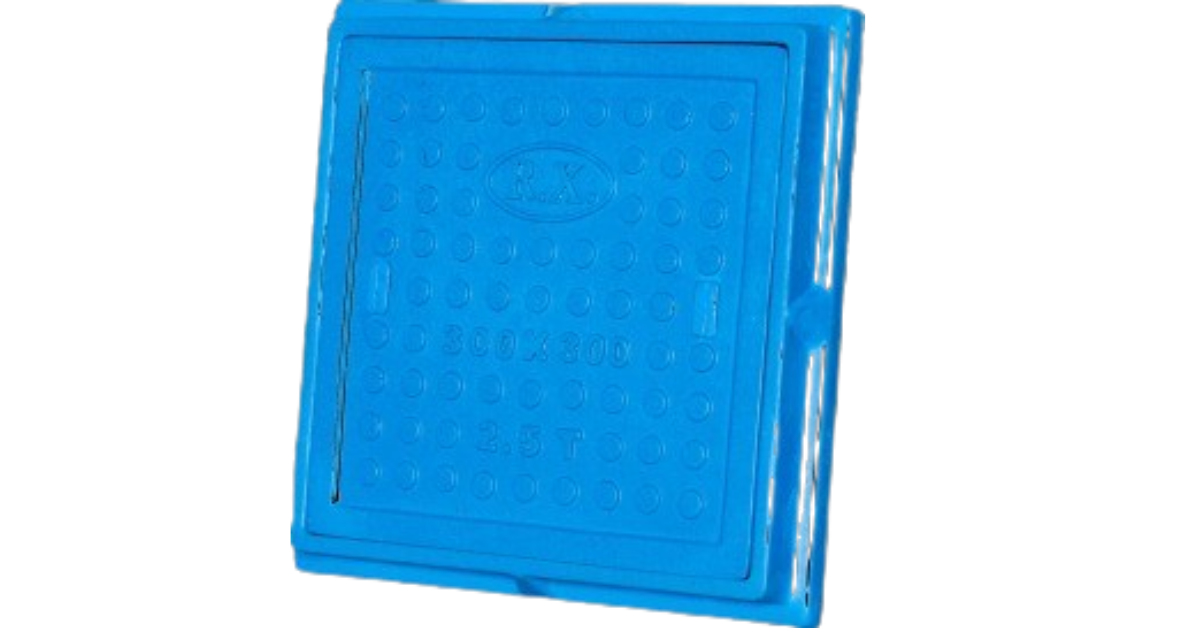
What is a FRP manhole cover?
FRP stands for Fiber Reinforced Plastic, which is a composite material formed by mixing a polymer matrix with reinforcing fibers such as glass, carbon, or aramid. The end result is a tough, long-lasting, and lightweight material. FRP manhole covers are made from this composite material, which has substantial advantages over older choices.

Why FRP Manhole Cover
The change to FRP manhole covers is motivated by their greater performance and cost savings. Municipalities and industry are recognizing that the initial investment in FRP covers pays dividends in terms of lower maintenance, increased durability, and improved safety. Furthermore, their environmental resistance and adjustable design possibilities make them an appealing choice for modern infrastructure requirements. Read Less

Advantages of FRP Manhole Covers
Lightweight. One of the most obvious advantages of FRP manhole covers is their lightweight design. Unlike cast iron covers, which can be exceedingly heavy, FRP coverings are simple to transport and install. This lowers labor expenses and lessens the likelihood of injury during installation and maintenance.
Corrosion Resistance: FRP manhole covers are very resistant to corrosion caused by chemicals and environmental conditions. This makes them excellent for usage in severe conditions, such as those where water, chemicals, or salt are present in abundance.
FRP covers have an extremely high strength-to-weight ratio, despite their lightweight design. They can handle severe weights and impacts, making them ideal for use in high-traffic locations.
FRP is non-conductive and non-magnetic, which adds safety to electrical systems
Applications and situations where electromagnetic interference may be a concern.
Aesthetic Flexibility: FRP manhole covers can be personalized in terms of color, pattern, and texture. This enables them to blend in with their surroundings or achieve specific aesthetic standards.
Cost-effective: Over time, FRP manhole covers can be less expensive than traditional materials. Their durability lowers the frequency of replacement and maintenance, resulting in decreased lifecycle costs.


