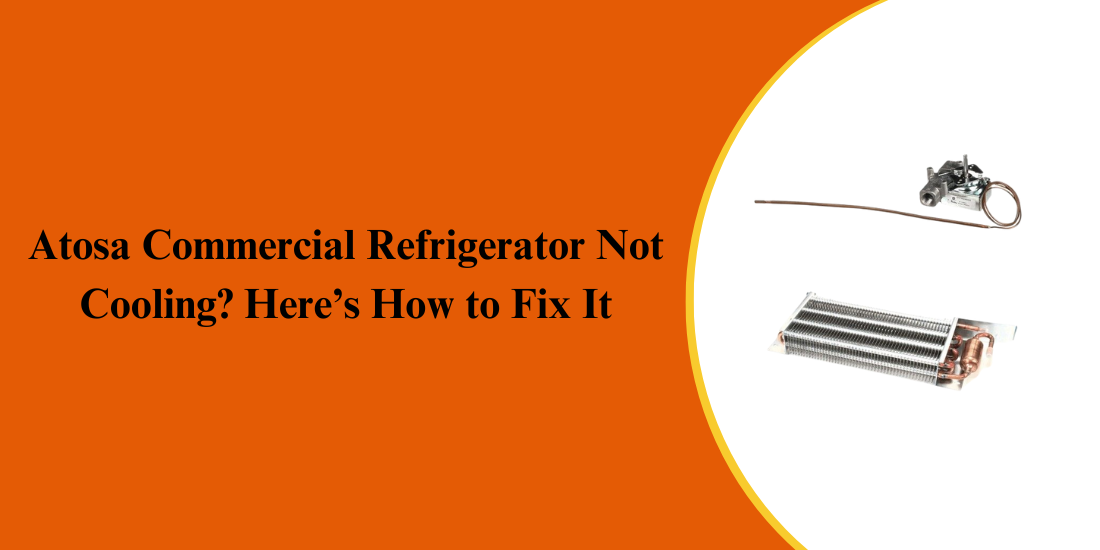
Ensuring consistent and reliable cooling performance is essential for any commercial kitchen, and the proper operation of an Atosa commercial refrigerator plays a critical role in food safety and service efficiency. When an Atosa refrigerator stops cooling, it can lead to spoiled food, interrupted service, and potential compliance risks. These issues often result from worn Atosa replacement parts, electrical malfunctions, thermostat failures, or aging components that can no longer maintain proper cooling performance.
Timely inspection, accurate troubleshooting, and the use of high-quality Atosa spare parts can restore dependable refrigeration, minimize downtime, and prevent costly operational disruptions.
This guide covers:
- The most common signs that an Atosa commercial refrigerator is not cooling properly
- How electrical issues, worn components, and refrigerant problems affect cooling performance
- Key Atosa replacement parts that may require repair or replacement
- Practical troubleshooting and preventive maintenance to support reliable operation
By following the guidance in this article, foodservice operators and technicians can maintain consistent refrigeration temperatures, improve equipment efficiency, extend the service life of Atosa commercial refrigerators, and reduce recurring cooling issues that impact daily operations.
Common Signs Your Atosa Refrigerator Is Not Cooling Properly
Early detection of cooling issues in Atosa commercial refrigerators prevents food spoilage, maintains kitchen efficiency, and avoids costly repairs, often requiring timely inspection, troubleshooting, or replacement with genuine Atosa spare parts.
Some of the most common signs include:
- Rising Internal Temperatures: When your refrigerator consistently fails to stay in the right range—typically 34–38°F for fresh food compartments—food may spoil quickly. This is often one of the first indicators of cooling problems.
- Uneven Cooling Across Shelves: If some sections of the refrigerator are cold and others are warm, airflow may be obstructed or the evaporator fan could be malfunctioning. Uneven temperatures can compromise food safety and indicate the need for component inspection.
- Frost or Ice Buildup: Excessive frost accumulation on the evaporator coils or in freezer sections can block airflow, reducing cooling efficiency. Defrost system failures or clogged drain lines are common culprits.
- Unusual Noises: Buzzing, rattling, or clicking sounds often point to a failing compressor, fan, or other mechanical components. Ignoring these noises can lead to complete unit failure.
- Frequent Compressor Cycling: A compressor that runs constantly or cycles irregularly may signal thermostat issues, low refrigerant levels, or failing Atosa replacement parts.
Regularly keeping an eye on these indicators helps stop small problems from turning into bigger ones. Addressing problems promptly with genuine Atosa spare parts ensures reliable operation, extends the refrigerator’s lifespan, and minimizes downtime in a busy commercial kitchen.
Causes of Cooling Failure in Atosa Commercial Refrigerators
Cooling problems in Atosa commercial refrigerators can stem from multiple factors. Understanding the root cause is critical for effective repair:
- Dirty Condenser Coils: Condenser coils remove heat from the refrigerant. When dust, grease, or debris accumulates, heat transfer is compromised, causing the refrigerator to overheat and fail to cool.
- Faulty Evaporator Fan: The evaporator fan circulates cold air throughout the fridge. A malfunctioning fan can result in uneven cooling or warm spots.
- Compressor or Refrigerant Issues: The compressor compresses and circulates the refrigerant. Problems such as leaks, low refrigerant, or a failing compressor can drastically reduce cooling efficiency.
- Thermostat or Sensor Malfunctions: A faulty thermostat or temperature sensor can send incorrect readings to the control board, preventing proper cooling cycles.
- Door Seal Damage: Worn or damaged door gaskets allow warm air to enter, forcing the refrigerator to work harder and potentially leading to cooling failure.
- Defrost System Failures: If the defrost heater or timer malfunctions, ice buildup can obstruct airflow, reducing cooling efficiency.
Addressing these causes often requires the use of genuine Atosa spare parts to ensure compatibility and long-term reliability. Replacing worn or damaged components with original parts helps avoid recurring Atosa replacement parts issues that can arise from inferior or incompatible alternatives.
How to Fix an Atosa Commercial Refrigerator That Isn’t Cooling
Repairing an Atosa commercial refrigerator involves a combination of troubleshooting, component inspection, and timely replacement of faulty parts. Here are step-by-step methods to restore proper cooling:
- Check the Thermostat Settings: Ensure the thermostat is set to the recommended temperature (usually 34–38°F for refrigerators and 0–5°F for freezers). If the thermostat is faulty, it may require replacement with a certified Atosa replacement part.
- Clean and Inspect Condenser Coils: Dust and debris reduce heat transfer efficiency. Carefully clean the coils with a brush or vacuum to restore proper function. In cases where coils are damaged, replacing them with Atosa spare parts may be necessary.
- Evaluate the Evaporator Fan: Listen for unusual noises or check if airflow is weak. A malfunctioning fan can be replaced using compatible Atosa replacement parts to ensure even cooling throughout the unit.
- Examine the Compressor and Refrigerant: Check for signs of leaks, abnormal noises, or overheating. Low refrigerant levels require recharging, while a failing compressor should be replaced with a genuine Atosa spare part to prevent recurring issues.
- Inspect Door Seals and Gaskets: Examine the door for gaps, cracks, or warping. Replace worn gaskets with original Atosa replacement parts to maintain an airtight seal and prevent energy loss.
- Check the Defrost System: Inspect the defrost heater, thermostat, and timer for proper operation. Malfunctioning components may require replacement with certified Atosa spare parts to restore efficient defrost cycles.
- Reset or Replace Control Boards: If all other components are functioning correctly but the unit still fails to cool, the control board may be faulty. Using genuine Atosa replacement parts ensures the refrigerator operates reliably after replacement.
By following these procedures methodically, cooling functionality can frequently be restored without requiring a complete appliance replacement, saving money and time while avoiding spoiling.
Cleaning and Maintenance Tips to Improve Cooling
Preventive maintenance is essential for maintaining your Atosa commercial refrigerator to prevent cooling issues. Here are some key practices:
- Regular Coil Cleaning: Clean condenser coils at least once a month to prevent dust and grease buildup that can hinder cooling.
- Monitor Door Seals: Inspect door gaskets regularly and replace any worn or damaged seals with certified Atosa replacement parts.
- Maintain Proper Airflow: Avoid overloading the refrigerator, and ensure vents and fans are unobstructed to allow even cold air circulation.
- Defrost Periodically: If your model is not fully automatic, defrost the freezer to prevent ice buildup that can block airflow.
- Check Thermostats and Sensors: Periodically verify that temperature settings are accurate and that sensors are functioning properly.
- Schedule Professional Inspections: Regular service from a qualified technician can identify early signs of component wear, allowing timely replacement with Atosa spare parts and avoiding costly downtime.
By adhering to these maintenance practices, you can minimize the risk of Atosa replacement parts issues and keep your commercial refrigerator performing efficiently. Preventive care ensures consistent cooling, energy efficiency, and longevity for your appliance.
Cooling problems in Atosa commercial refrigerators can disrupt kitchen operations, but most issues are preventable or repairable with proper care. Recognizing the common signs of malfunction, understanding the underlying causes, and implementing systematic fixes are essential steps to restore reliable performance. Using high-quality Atosa replacement parts and Atosa spare parts ensures that repairs are effective and long-lasting while avoiding recurring Atosa replacement parts issues. Regular cleaning, maintenance, and timely component replacement not only improve cooling efficiency but also protect your investment, keeping your commercial kitchen running smoothly every day.
PartsFe supplies high-quality commercial cooking equipment parts—including fryer, dishwasher, and griddle components—with fast delivery to keep your kitchen running smoothly and efficiently every day.
FAQ’s
1. How to fix a refrigerator that is not cooling?
Check power, temperature settings, condenser coils, fans, and door seals. Clean coils, ensure proper airflow, and replace faulty parts like thermostats or compressors if needed.
2. How to reset fridge compressor?
Unplug the refrigerator for 5–10 minutes, then plug it back in. This allows the compressor to reset and clear minor electrical or control issues.
3. How much does it cost to fix a fridge not cooling?
Repairing a refrigerator not cooling typically costs $150–$400, depending on the issue. Compressor replacements are more expensive, often ranging from $500 to $1,000.