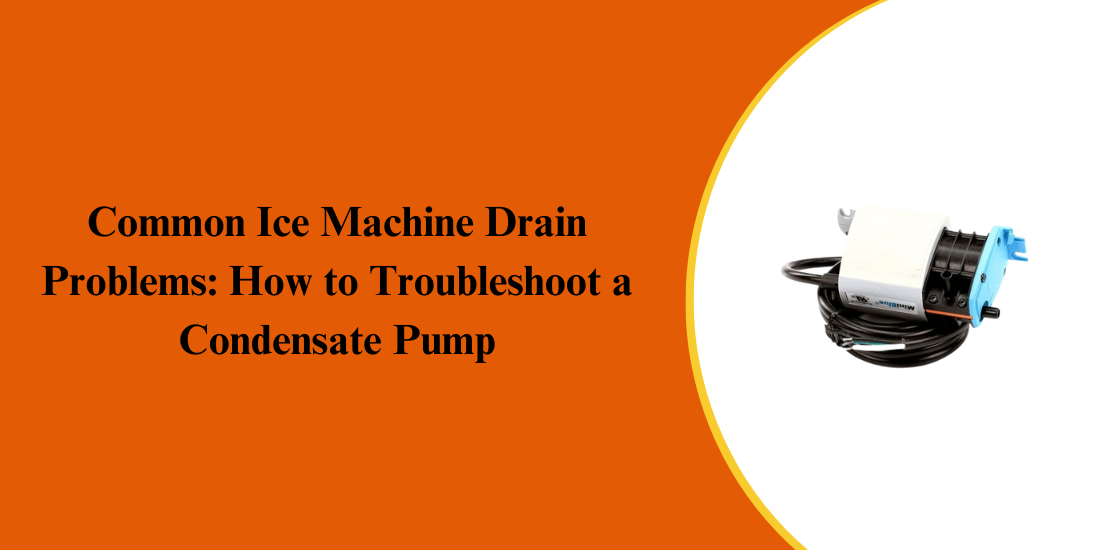
Ensuring reliable ice production and proper water management is essential for any commercial kitchen, and the efficient operation of an ice machine drain system plays a critical role in preventing downtime and water damage. When an ice machine experiences drain problems or a condensate pump failure, it can lead to water overflow, interrupted ice production, sanitation concerns, and costly service interruptions. These issues often stem from a failing ice machine condensate pump, clogged drain lines, electrical faults, or worn pump components that can no longer move water efficiently.
Timely inspection, accurate troubleshooting, and the use of high-quality commercial ice machine condensate pump components can restore proper drainage, protect internal systems, and minimize operational disruptions.
This guide covers:
- The most common signs of ice machine drain problems and condensate pump failure
- How clogged drains, electrical issues, and worn components affect condensate removal
- Key components related to the ice maker condensate drain pump that may require service or replacement
- Practical troubleshooting and preventive maintenance steps to support reliable ice machine operation
By following the guidance in this article, foodservice operators and technicians can maintain proper drainage, prevent recurring water issues, extend the service life of condensate pumps, and ensure consistent, efficient ice production in demanding commercial environments.
Common Causes of Ice Machine Drain and Condensate Pump Failures
Ice machine drain problems rarely happen without warning. In most cases, condensate pump failure is the result of gradual wear, poor maintenance, or environmental factors that stress the system over time.
Clogged Drain Lines and Pump Reservoirs
The most frequent cause of ice machine condensate pump failure is blockage. Slime, scale, algae, and debris can accumulate inside drain lines and pump reservoirs. As restrictions build, the pump works harder, overheats, or fails to activate altogether.
Blocked drain systems also cause water to remain in the unit longer than designed, which can trigger safety switches or cause water overflow into sensitive electrical components.
Float Switch Malfunctions
Most ice machine condensate drain pumps rely on a float switch to detect rising water levels and activate the pumps. Over time, debris or mineral accumulation may limit the float’s freedom of movement. When this happens, the pump may not turn on, even though water is present.
A stuck float switch is a common reason technicians mistakenly assume the ice machine water pump is not working when the issue is actually a control-related failure.
Electrical Supply Issues
Loose wiring, damaged power cords, blown fuses, or failed relays can interrupt power to the condensate pump. In commercial environments where equipment vibrates constantly, electrical connections can loosen over time, leading to intermittent pump operation.
Pump Motor Wear and Burnout
Condensate pumps are designed to handle water, not sludge or scale. When forced to pump thick debris or operate continuously due to poor drainage, the motor can overheat and fail. In these cases, ice machine water pump replacement or condensate pump replacement becomes unavoidable.
Improper Installation or Drain Line Routing
Incorrect drain line slope, excessive lift height, or long horizontal runs place additional strain on the commercial ice machine condensate pump. Pumps operating beyond their rated capacity wear out faster and struggle to evacuate water efficiently.
Signs Your Ice Machine Condensate Pump Is Not Draining Properly
Identifying early symptoms of condensate pump problems can prevent major water damage and operational shutdowns.
- Water Pooling Inside or Around the Ice Machine: Standing water beneath or inside the machine is one of the clearest indicators of a drainage issue. If the ice machine condensate pump is running but water isn’t moving, a blockage or internal pump failure is likely.
- Ice Production Stops or Becomes Inconsistent: Many ice machines include safety sensors that shut down production when water does not drain properly. You may notice reduced ice output, irregular freeze cycles, or frequent system lockouts.
- Unusual Pump Noises: Grinding, buzzing, or humming sounds often indicate a failing motor or debris interfering with the impeller. Silence when the pump should be running is another sign that the ice machine water pump is not working as intended.
- Frequent Error Codes or Alarm Conditions: Modern commercial ice machines monitor drainage closely. Drain-related fault codes often point directly to condensate pump or water evacuation problems.
- Overflow or Drain Pan Filling Too Quickly: If the drain pan fills faster than the pump can remove water, the system is either undersized, partially clogged, or nearing pump failure.
Step-by-Step Instructions to Troubleshooting an Ice Machine Condensate Pump
When drainage issues arise, a systematic troubleshooting process helps isolate the cause and determine whether cleaning, repair, or ice machine water pump replacement is required.
Step 1: Power Down and Inspect Safely
Always disconnect power before servicing. Inspect the ice machine condensate drain pump and surrounding area for visible leaks, cracked tubing, or loose electrical connections.
Step 2: Check the Drain Line for Blockages
Disconnect the drain line from the pump outlet and inspect for scale, slime, or kinks. Flush the line with warm water to confirm it is clear. A blocked drain line often mimics pump failure.
Step 3: Check the Float Switch’s Operation
Manually lift the float inside the pump reservoir. If the pump does not activate, the switch that controls the float or electrical circuit may be faulty. Clean the float thoroughly and retest.
Step 4: Verify Electrical Power
Use a multimeter in order to confirm the pump is receiving proper voltage. Inspect wiring harnesses, terminals, and fuses. Electrical faults are a common reason a commercial ice machine condensate pump fails to run.
Step 5: Listen for Motor Operation
If power is present but the pump motor does not engage, the internal motor or impeller may be seized. This condition typically indicates the need for ice machine water pump replacement rather than repair.
Step 6: Test Pump Discharge
Reconnect the drain line and activate the pump. Observe water flow at the discharge point. Weak or inconsistent flow suggests internal wear or partial blockage within the pump housing.
Step 7: Evaluate Repair vs. Replacement
Minor clogs, float issues, or wiring problems are usually repairable. However, burned-out motors, cracked housings, or repeated failures justify replacing the ice machine condensate pump to restore reliability.
How to Clean and Maintain an Ice Machine Drain System
Preventive maintenance is the most effective way to keep a condensate pump and avoid unexpected downtime.
- Regular Drain Line Cleaning: Drain lines should be flushed periodically with warm water or manufacturer-approved cleaners to remove slime and scale. This prevents restrictions that overload the ice machine condensate drain pump.
- Pump Reservoir Cleaning: Remove and clean the pump reservoir during scheduled maintenance. Clear any sediment, mold, or debris that could interfere with float operation or impeller movement.
- Inspect Float Switches and Sensors: Ensure floats move freely and are not coated with mineral buildup. A clean float switch improves pump responsiveness and reduces false shutdowns.
- Check Electrical Connections: Inspect wiring, plugs, and strain reliefs for signs of wear or corrosion. Tight, secure connections help prevent intermittent failures that mimic an ice machine water pump not working.
- Follow Manufacturer Maintenance Intervals: Most manufacturers recommend quarterly or semi-annual drain system inspections for commercial equipment. Adhering to these intervals significantly reduces the need for emergency ice machine water pump replacement.
- Replace Aging Pumps Proactively: Condensate pumps have a finite service life. Replacing a worn commercial ice machine condensate pump before failure can prevent water damage, lost ice production, and costly downtime.
Ice machine drain problems can quickly disrupt operations if left unaddressed, with a faulty condensate pump often at the center of the issue. Understanding common failure causes, recognizing early warning signs, and following proper troubleshooting steps allow operators to restore drainage before serious damage occurs. Regular cleaning and preventive maintenance of the ice machine condensate pump and drain system help prevent clogs, reduce strain on components, and extend equipment life. When repairs are no longer effective, timely ice machine water pump replacement ensures reliable water removal. Proactive care keeps commercial ice machines running efficiently, protects surrounding equipment, and supports consistent ice production in busy foodservice environments.
PartsFe makes it easy to buy commercial kitchen parts, offering high-quality fryer, dishwasher, and griddle replacement parts with fast delivery to keep your kitchen running efficiently every day.
FAQ’s
1. How do I know if my condensate pump is bad?
Signs include water pooling around equipment, unusual noises from the pump, slow or no drainage, or the system shutting down to prevent overflow.
2. What happens if a condensate pump is clogged?
A clogged pump can cause water backup, leaks, equipment downtime, and potential damage to floors or surrounding commercial equipment.
3. Do condensate pumps need to be cleaned?
Yes, regular cleaning prevents clogs and bacterial or mold buildup, ensures efficient drainage, and reduces maintenance issues in commercial equipment.