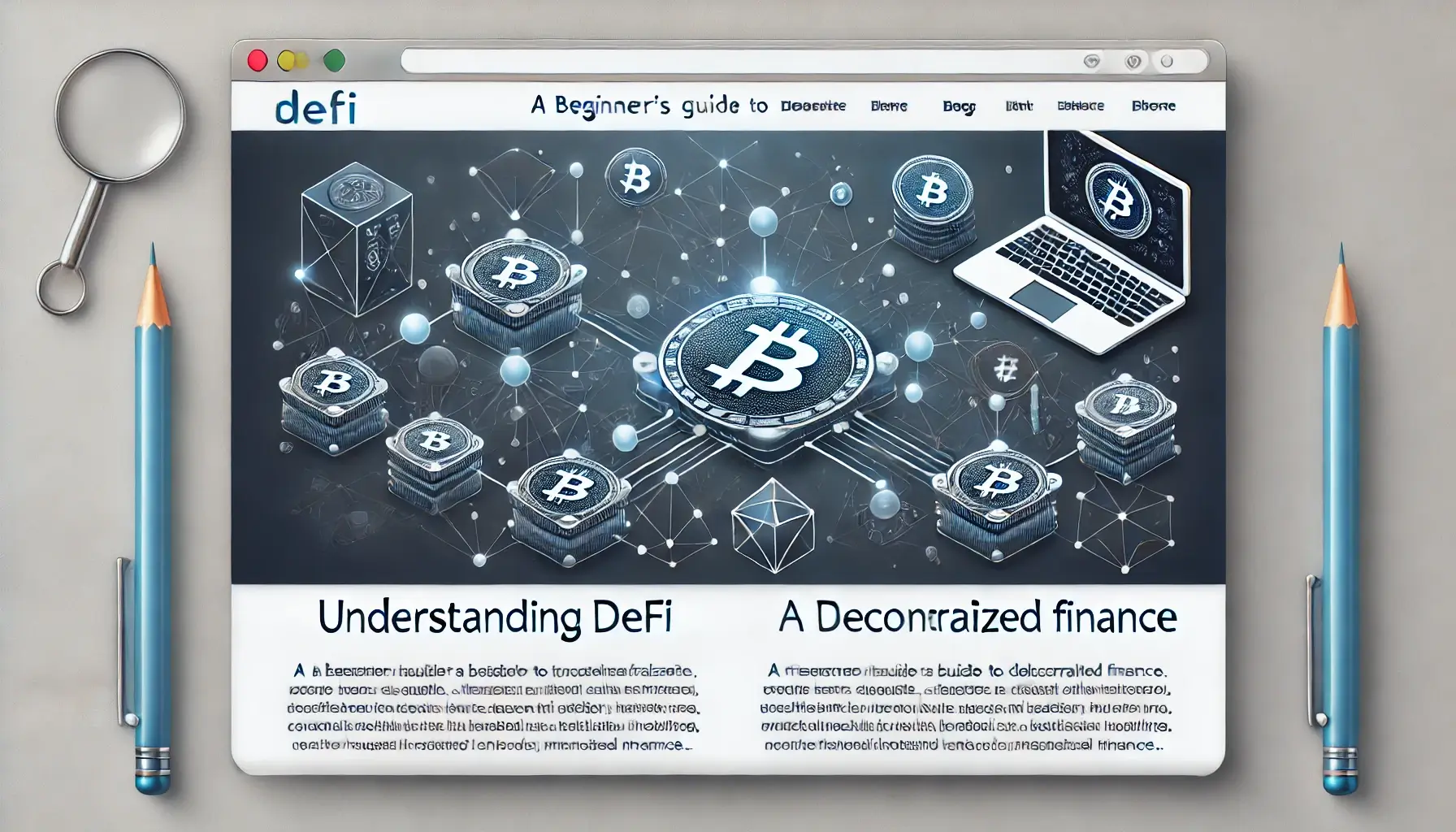
Understanding DeFi: A Beginner’s Guide to Decentralized Finance
Decentralized Finance, or DeFi, is revolutionizing the financial industry. This guide will take you through the basics of DeFi, its benefits, risks, and how you can get started. By the end, you’ll have a solid understanding of what DeFi is all about and why it’s gaining so much traction.
Are you ready to dive into the world of DeFi? Let’s get started!
What is DeFi?
DeFi, short for decentralized finance, refers to a new financial ecosystem that operates without traditional banks and financial institutions. It uses blockchain technology to offer financial services like lending, borrowing, trading, and earning interest, all without intermediaries.
How Does DeFi Work?
DeFi leverages smart contracts, which are self-executing co
ntracts with the terms directly written into code. These contracts run on decentralized blockchain networks, such as Ethereum. When certain conditions are met, the contracts execute automatically, ensuring transparency and reducing the need for intermediaries.
Key Components of DeFi
- Decentralized Exchanges (DEXs): Platforms like Uniswap and Sushiswap allow users to trade cryptocurrencies directly without a central authority.
- Lending Platforms: Services like Aave and Compound let users lend their crypto assets to others and earn interest in return.
- Stablecoins: Cryptocurrencies like DAI and USDC are pegged to stable assets like the US dollar, offering stability in the volatile crypto market.
- Yield Farming: A way to earn rewards by staking or lending crypto assets within DeFi protocols.
Benefits of DeFi
- Accessibility: Anyone with an internet connection can access DeFi services, regardless of location.
- Transparency: Transactions and smart contracts are recorded on a public blockchain, ensuring full transparency.
- Control: Users maintain control over their assets, unlike traditional banking systems where banks hold your funds.
- Innovation: DeFi is a hotbed for financial innovation, with new protocols and services emerging regularly.
Risks of DeFi
- Volatility: Cryptocurrencies are known for their price volatility, which can affect DeFi investments.
- Smart Contract Bugs: Errors in smart contract code can lead to significant losses.
- Regulatory Uncertainty: DeFi operates in a regulatory gray area, and future regulations could impact its growth and usability.
🚀 Ready to dive into the world of DeFi? Discover the basics of Decentralized Finance and how it’s reshaping the financial landscape in our latest guide! 💡 From key concepts to practical tips, this is your ultimate starting point. Click to read more and unlock the future of finance! 🔗👇
[Explore the Guide](https://freecoins24.io/defi-basics-guide/)