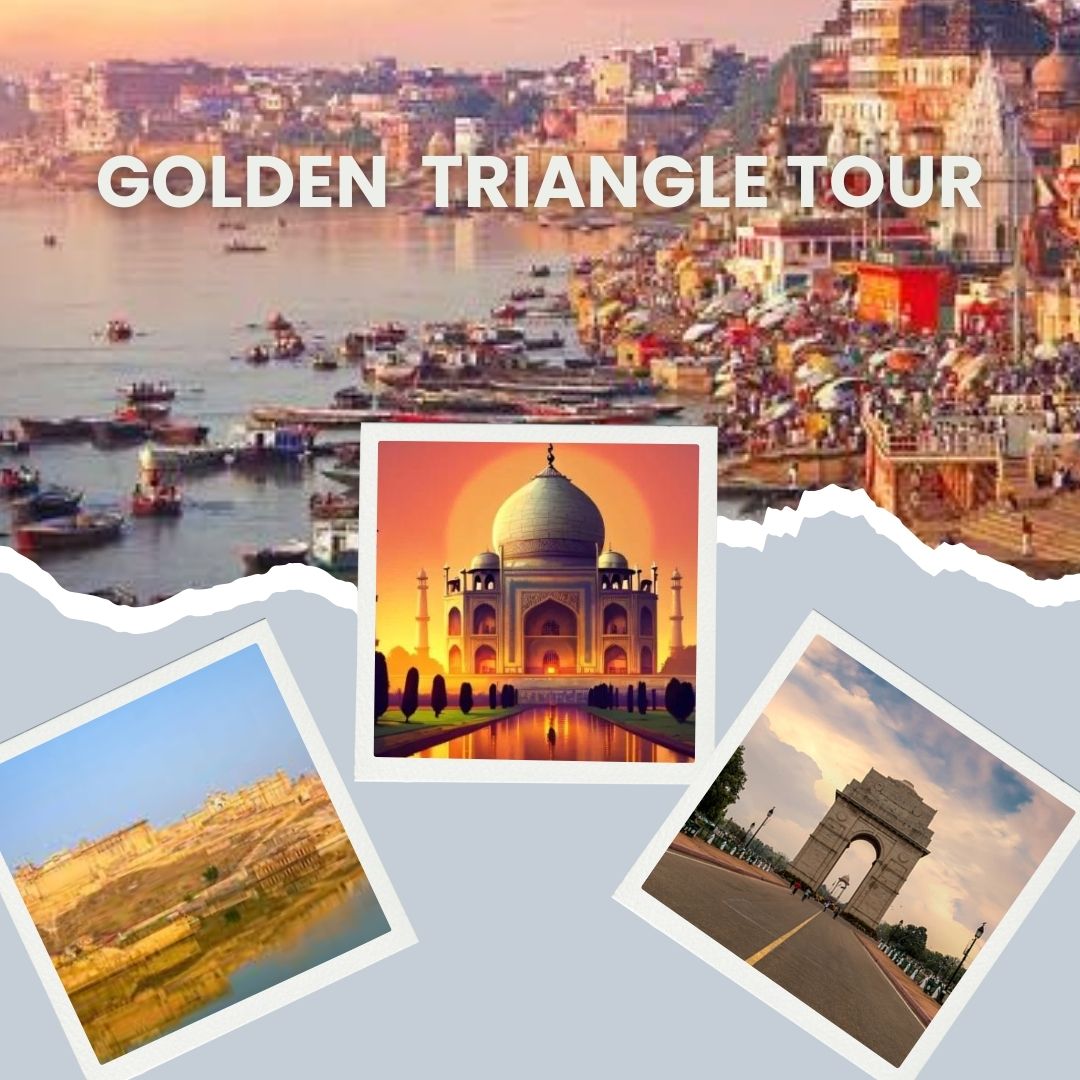
With our 3-day tour, take off on an enthralling voyage through India’s 3-Day Golden Triangle Tours. This private guided tour takes you through the famous cities of Delhi, Agra, and Jaipur, highlighting their rich histories, cultures, and architectural marvels. 3-Day Golden Triangle Tours. Discover regal forts, exquisite palaces, and the magnificent Taj Mahal for a once-in-a-lifetime adventure.
Route
Day 1: Touring Delhi
Morning Pickup: Let our private, air-conditioned vehicle pick you up in the morning from your Delhi hotel or place of home to start your journey.
Visit the magnificent Qutub Minar, the world’s highest brick minaret and a UNESCO World Heritage site.
Experience the tranquility of the Lotus Temple, which is well-known for its beautiful architecture in the shape of a lotus and its serene ambiance.
Drive by the famous India Gate, a war memorial erected in honor of Indian soldiers.
In the afternoon, visit Raj Ghat to honor Mahatma Gandhi. The memorial monument is surrounded by peaceful gardens.
Discover the amazing Humayun’s Tomb, another UNESCO World Heritage site and a wonder of early Mughal architecture.
Day 2: Agra Fort and Taj Mahal
Early Morning Departure: Take an early morning journey to Agra, which will be picturesque.
See the breathtaking Taj Mahal before dawn. The Taj Mahal is a symbol of love and a UNESCO World Heritage site. Your guide will tell you about its amazing architectural design and rich history.
Breakfast: Have a delicious meal at a nearby restaurant.
Agra Fort: Discover the magnificent Agra Fort, the primary palace of the Mughal rulers and a UNESCO World Heritage site.
Day 3: Jaipur’s City Palace, Hawa Mahal, and Amber Fort
Early Morning Departure: Make an early morning departure for Jaipur from Agra.
Amber Fort: Take a vehicle or elephant ride up the hill to admire the magnificent Amber Fort’s palaces, courtyards, and expansive views.
Lunch: Visit a nearby eatery to indulge in authentic Rajasthani food.
Discover the City Palace, which combines Mughal and Rajasthani architectural styles and has gardens, courtyards, and museums.
Jantar Mantar: See the historic astronomy equipment on display at Jantar Mantar, an astronomical observatory and UNESCO World Heritage site.
Admire the exquisite façade of the Palace of Winds, the Hawa Mahal, which is renowned for its distinctive windows and attractive architecture.
Included:
Every transfer uses a private, air-conditioned vehicle.
knowledgeable and skilled private tour guide
Admission costs to every monument listed on the schedule
Ride in an elephant or jeep at Amber Fort (available subject to availability)
In hotels and restaurants, breakfast
Lunch at nearby eateries
snacks and bottled water during the trip
All tolls, taxes, and parking costs
Exclusions: Any costs for personal use
ALSO READ-
Overview of Juneteenth
Juneteenth: What is it? (H2)
Juneteenth, a day commemorating the freedom of African Americans from slavery in the United States, is also known as Freedom Day or freedom Day.
Contextual History (H2)
Juneteenth commemorates the date, June 19, 1865, when Union General Gordon Granger arrived in Galveston, Texas, two and a half years after the Emancipation Proclamation, to declare the abolition of slavery.
Importance of Juneteenth: A Day to Celebrate Freedom (H2)
In addition to commemorating the release of African Americans from slavery, Juneteenth also highlights the value of equality and freedom.
Importance to Culture (H2)
With customs including music, food, and get-togethers with the community, it has transformed into a representation of African American ancestry, culture, and tenacity.
Juneteenth Customs and Traditions
Celebrations and Festivities (H2)
Juneteenth is celebrated in American communities with parades, barbecues, historical reenactments, and get-togethers with family.
Symbolism and Colors (H2)
Often connected to Juneteenth, red, white, and blue stand for tenacity, liberty, and nationalism.
Development and Acknowledgment
The American History of Juneteenth (H2)
Since its grassroots beginnings in Texas, Juneteenth has become a nationally recognized day of reflection and memorial honoring the African American struggle for freedom.
Legislative and Official Recognition (H2) Juneteenth is becoming increasingly important in recognizing the rich history of the United States and fostering unity, as evidenced by efforts to declare it a federal holiday.
Education and Awareness on Juneteenth Today (H2)
The public is taught about Juneteenth’s historical significance and its relevance to current issues by schools, museums, and other cultural organizations.
Community Outreach and Engagement (H2) Juneteenth provides a platform for individuals and organizations to advocate for social justice, equity, and inclusivity in local communities.
In summary
Juneteenth is a reminder of the ongoing fight for justice and freedom in the United States. On this momentous day, we pay tribute to the tenacity of those who struggled for freedom and consider the continuous path toward universal equality.
FAQs Regarding Juneteenth 1. First, why is June 19th designated as Juneteenth?
Juneteenth honors June 19, 1865, the day Union troops entered Texas to carry out the Emancipation Proclamation and free African Americans who had been held as slaves.
2. How is Juneteenth observed by people?
Community get-togethers, parades, cookouts, music festivals, and conversations about African American history and culture are all examples of celebrations.
3. Is the Fourth of June a federal holiday?
The United States officially declared Juneteenth a federal holiday as of [current year], which is a major step toward recognizing the festival’s significance on a national level.
4. Which traditional foods are connected to Juneteenth?
African American culinary traditions can be found in traditional foods like collard greens, cornbread, red foods (like red velvet cake or red drink), and barbecue.
5. How has Juneteenth changed through the years?
Juneteenth, which began as a Texas-based celebration, has expanded to become a national holiday honoring African American history and freedom that promotes awareness and pride in one’s background.