


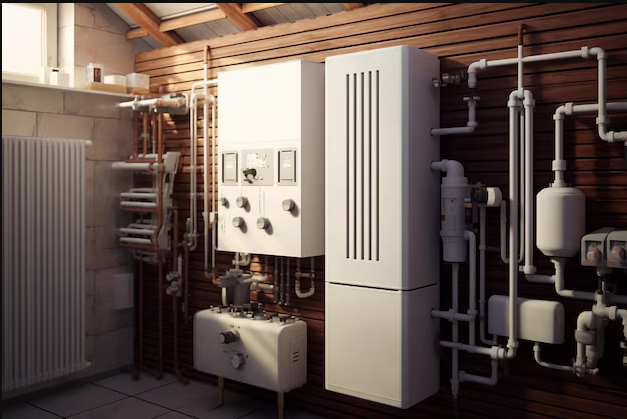
When choosing an industrial steam boiler, understanding the various types and their specific advantages is crucial. Steam boilers play a vital role in many industries, transporting heat energy from one location to another. In this guide, we’ll walk through the key considerations for selecting the best industrial steam boiler for your operations.
What Are Industrial Steam Boilers?
Industrial steam boilers are essential pieces of equipment used to transport heat energy within a facility. A boiler is a pressure vessel that captures heat and carries it from the boiler room to the point of use. Due to the potential dangers of steam boilers, strict regulations govern their manufacturing and operation to ensure safety and efficiency.
Types of Industrial Steam Boilers
There are several types of industrial steam boilers, each designed to meet different operational requirements. Understanding these types will help you choose the right boiler for your facility.

1. Firetube Steam Boilers
Firetube steam boilers feature a simple design and are best suited for smaller industrial operations with lower pressure requirements. In these boilers, hot combustion gases flow through tubes, transferring heat to the surrounding water. Firetube boilers are cost-effective, require minimal maintenance, and provide a robust heating solution for smaller capacities.
2. Watertube Steam Boilers
Watertube steam boilers are designed for larger operations that require higher capacity, pressure, and temperature. In these boilers, water circulates inside the tubes, and the hot gases from combustion flow around the tubes, heating the water. Watertube boilers can handle much higher pressures and temperatures compared to firetube boilers, making them ideal for large-scale operations.
3. Industrial Electric Steam Boilers
Electric steam boilers are powered by electricity rather than combustion. They are an efficient and eco-friendly solution, especially for smaller capacities. These boilers can be used for both steam and hot water applications and offer advantages like zero emissions and resistance to thermal shock. However, for high-capacity operations, they require significant electrical power, which can be a limiting factor.
4. Condensing Steam Boilers
Condensing steam boilers are known for their high energy efficiency, often reaching levels of 90% or more. These boilers are increasingly popular in both industrial and residential settings. They feature a specially designed heat exchanger that cools flue gases to a point where condensation occurs, capturing and reusing this energy. Condensing boilers are ideal for applications with relatively low-temperature loops.
Maximising Efficiency with an Economiser
For non condensing boilers, adding an economiser can capture additional heat from the flue gases, improving overall energy efficiency. However, unlike condensing boilers, these systems cannot internalise the condensation process within the boiler itself.
How to Choose the Best Industrial Boiler for Your Needs
Selecting the right industrial steam boiler involves several key considerations:
1. Steam Output Requirements
Determine how much steam your facility needs and the type of output required—whether it’s high pressure steam, low pressure steam, superheated steam, or hot water.
2. Operating Pressures and Temperatures
The boiler you select must be capable of handling the specific pressures and temperatures your facility requires.
3. Efficiency Levels
Energy efficiency is a key factor. Higher efficiency boilers can save operational costs in the long run, so it’s important to assess the desired efficiency levels for your facility.
4. Fuel Type
Consider which fuel source will be used to fire the burner. Options include natural gas (NG), oil, propane, and biofuels. The availability and cost of fuel can have a significant impact on the overall cost of operation.
5. Installation Location
Where the boiler will be installed is an important consideration. Make sure the installation area is accessible for maintenance and repairs, and take into account any space or location limitations.
6. Environmental Conditions
Consider how external weather conditions, such as temperature and humidity, may affect boiler performance throughout the year.
Conclusion
Choosing the right industrial boiler requires careful consideration of your facility’s specific needs, operational capacity, and long-term goals. Whether you opt for a firetube, watertube, electric, or condensing boiler, assessing factors such as efficiency, pressure, fuel type, and environmental impact will help you make an informed decision. Always consult with experts and evaluate all available options to ensure you select the best solution for your operation.


