When it comes to straightening teeth, patients in Chesterfield have more options than ever before. Among the most popular choices are traditional braces and Invisalign, a modern alternative that has gained significant traction in recent years. As providers of Invisalign services in Chesterfield, we often encounter patients who are curious about the differences between these two orthodontic treatments. In this blog, we’ll explore the pros and cons of each option from a professional dental perspective, helping you make an informed decision about your oral health.
Understanding the Basics
Before diving into the comparison, let’s briefly review what each treatment entails:
Traditional Braces: These consist of metal brackets attached to the teeth, connected by wires and tiny rubber bands. The wires are periodically tightened to gradually shift teeth into the desired position.
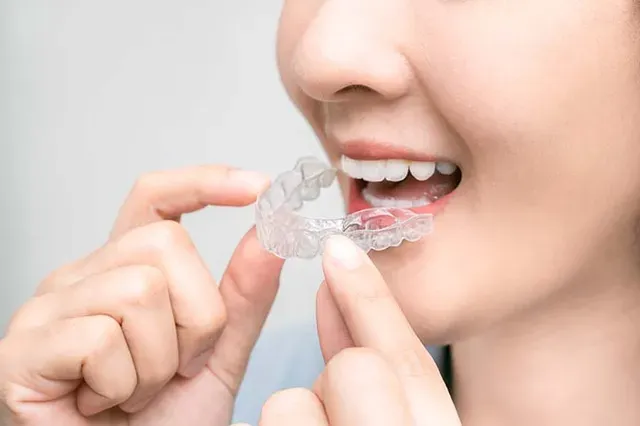
Invisalign: This system uses a series of clear, removable aligners custom-made for each patient. The aligners are changed every 1-2 weeks, progressively moving teeth into alignment.
Now, let’s examine various aspects of these treatments to understand their differences and similarities.
Appearance and Aesthetics
One of the most significant differences between traditional braces and Invisalign is their appearance. Traditional braces are highly visible, with metal brackets and wires prominent on the teeth. While some patients, particularly younger ones, enjoy customizing their braces with colored bands, others feel self-conscious about their appearance.
Invisalign, on the other hand, is designed to be nearly invisible. The clear aligners are difficult to notice, even at close range. This makes Invisalign a popular choice among adults and teenagers who are concerned about their appearance during treatment.
However, it’s worth noting that advancements in traditional braces have led to more aesthetically pleasing options, such as ceramic braces that blend with the natural tooth color or lingual braces placed behind the teeth.
Comfort and Convenience
Comfort is another area where these treatments differ significantly. Traditional braces can cause discomfort, especially after adjustments. The brackets and wires can also irritate the inside of the mouth, leading to sores or cuts. Patients often need to use dental wax to alleviate this irritation.
Invisalign aligners are generally more comfortable as they’re made of smooth plastic with no sharp edges. While patients may experience some pressure when switching to a new set of aligners, it’s typically less intense than the discomfort associated with tightening braces.
In terms of convenience, Invisalign has a clear advantage. The aligners are removable, allowing patients to eat whatever they want without worrying about food getting stuck in their braces. This also makes maintaining oral hygiene much easier, as patients can brush and floss normally.
Traditional braces require more careful eating habits and meticulous cleaning routines. Patients need to avoid certain foods that could damage the braces and use special tools to clean around the brackets and wires effectively.
Treatment Efficiency and Effectiveness
When it comes to treating complex orthodontic issues, traditional braces often have the upper hand. They allow for more precise control over tooth movement, making them better suited for severe misalignments, rotations, or significant bite issues.
Invisalign has come a long way since its introduction and can now treat a wide range of orthodontic problems. However, there are still some complex cases where traditional braces might be more effective or efficient.
Treatment duration can vary depending on the individual case, but on average, both treatments take about 1-3 years. Invisalign treatment might be slightly faster for minor corrections, while complex cases treated with traditional braces could take longer.
It’s important to note that the success of Invisalign treatment heavily depends on patient compliance. Since the aligners are removable, patients must wear them for 20-22 hours a day to achieve the desired results. This level of discipline isn’t required with traditional braces, which are fixed in place.
Cost Considerations
The cost of orthodontic treatment can vary widely depending on the complexity of the case and the duration of treatment. Generally, Invisalign tends to be slightly more expensive than traditional braces. However, the price difference has narrowed in recent years as Invisalign has become more common.
It’s worth noting that many dental insurance plans now cover Invisalign just as they would traditional braces. Always check with your insurance provider to understand your coverage.
Maintenance and Follow-up Care
Traditional braces require regular appointments for adjustments, usually every 4-6 weeks. During these visits, the orthodontist tightens the wires and may replace bands.
Invisalign treatment also involves regular check-ups, typically every 6-8 weeks. These appointments are generally shorter as they mainly involve checking progress and providing the next sets of aligners.
After active treatment, both options require the use of retainers to maintain the results. However, Invisalign often transitions more smoothly into this phase as patients are already accustomed to wearing removable appliances.
Lifestyle Considerations
Your lifestyle and personal preferences play a significant role in choosing between these treatments. Invisalign offers more flexibility, allowing you to remove the aligners for special occasions or important meetings. This can be particularly appealing for adults in professional settings.
Traditional braces, while always visible, require less day-to-day responsibility from the patient. Once they’re on, they’re working 24/7 without any effort on your part.
For athletes, especially those involved in contact sports, traditional braces might pose a higher risk of injury to the inside of the mouth. Invisalign aligners can be removed and replaced with a regular mouthguard during sports activities.
Making the Decision
Choosing between Invisalign and traditional braces is a personal decision that should be made in consultation with your orthodontist. Here are some general guidelines:
Invisalign might be preferable if:
- Aesthetics during treatment is a top priority
- You have a lifestyle that benefits from the flexibility of removable aligners
- Your orthodontic issues are mild to moderate
- You’re disciplined enough to wear the aligners as prescribed
Traditional braces might be better if:
- You have complex orthodontic issues
- You’re concerned about the temptation to remove aligners too often
- Cost is a significant factor in your decision
- You prefer not to have the responsibility of keeping track of removable aligners
Remember, every smile is unique, and what works best for one person may not be ideal for another. A thorough examination and discussion with your orthodontist will help determine the most effective treatment plan for your specific needs.
Conclusion
Both Invisalign and traditional braces have their strengths and are capable of achieving excellent results when used appropriately. The choice between them often comes down to personal preferences, lifestyle factors, and the specific orthodontic issues that need to be addressed.
As dental professionals, our goal is to provide you with the information and guidance you need to make an informed decision. We encourage you to schedule a consultation to discuss your options in detail. With the right treatment plan, you’ll be on your way to achieving the healthy, beautiful smile you deserve.
Remember, investing in your smile is investing in your confidence and overall well-being. Whether you choose the time-tested reliability of traditional braces or the modern convenience of Invisalign, you’re taking an important step toward improved oral health and a more confident you. Consult with a trusted dentist in Chesterfield MO to determine the best option for your unique needs and start your journey toward a healthier, more radiant smile.