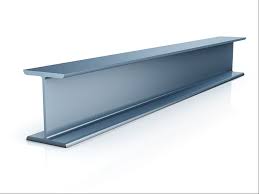
1.What is a steel beam?
A steel beam is a beam made of steel with high strength and stability.
Steel beams are mainly bending members that bear lateral loads in building structures. Their cross-sectional forms can be divided into solid beams and truss beams. Commonly used steel beam cross-sections include H-shaped steel beams, channel steel beams, box beams, etc., and the most commonly used is solid I-shaped steel beams. Steel beams can be divided into solid beams and truss beams according to their cross-sectional forms. Commonly used steel beam cross-sections include H-shaped steel beams, channel steel beams, box beams, etc., and the most commonly used is solid I-shaped steel beams. The force of the steel beam is connected to the steel column by bolts or welding, and the load of the floor or roof is transmitted to the steel column.
The advantages of steel beams include high strength, good durability, and fast construction speed. They are suitable for house structures with large spans and heavy loads, such as large rural villas or factories. However, the cost of steel beams is relatively high, requiring professional construction technology and equipment.
In addition, steel beams can be made of welded H-shaped steel or hot-rolled H-shaped steel, or welded into a closed box shape by steel plates. Concrete is poured outside the H-shaped steel or inside the box-shaped steel plate, which is a steel-concrete beam. Steel crane beams are welded from thick steel plates δ25.
Composite beams are usually made of steel plates or steel sections by welding or riveting. Common welded composite beams mainly include I-shaped sections and box sections, which are composed of upper and lower flange plates and webs respectively. The box section has a more complicated manufacturing process and consumes more materials, but it has good bending and torsional stiffness, and is particularly suitable for occasions that need to bear lateral loads, have high torsion requirements, or have limited beam height.
In summary, steel beams are an important building structural component, which brings infinite charm to buildings with its excellent mechanical properties and beautiful appearance
- The role of steel beams
The main role of steel beams is to bear and transmit external forces, protect the structure and occupant safety, and reduce maintenance costs. In different fields, the specific functions of steel beams are different:
(1) Construction field: As part of the building structure, steel beams mainly bear lateral forces and shear forces, with bending as the main deformation mode. They bear the entire weight of the components and roof in the upper structure of the building, and are an extremely important part of the upper structure of the building.
(2) Automobile field: The main function of anti-collision steel beams is to transmit and disperse the impact force during a collision, protecting the vehicle body structure and occupant safety. In low-speed collisions, anti-collision steel beams can effectively reduce maintenance costs and protect key components of the vehicle from damage.
These functions make steel beams play a vital role in their respective application fields.
- Steel beam splicing methods
Steel beam splicing methods mainly include welding, bolting and riveting.
(1) Welding is a common method of connecting steel beams, which heats the ends of two steel beams to the melting point and then fuses them together to form a whole. This connection method has the advantages of high strength, good rigidity, and tight connection, but it requires professional welding workers to operate, and high temperature and sparks will be generated during the welding process, so safety precautions should be taken.
(2) Bolt connection is another common steel beam connection method. Bolts are passed through the holes of two steel beams and then they are tightly fixed together with nuts. This connection method has the advantages of easy disassembly and reusability, but attention should be paid to the material and specifications of the bolts, as well as the tightening force of the bolts, otherwise the strength and stability of the connection will be affected.
(3) Riveting is a more complex steel beam connection method. Rivets are passed through the holes of two steel beams and then the two ends of the rivets are pressed together with a rivet gun to form a whole. This connection method has the advantages of high strength and good sealing, but it requires professional riveting workers to operate, and attention should be paid to the number and position of rivets, as well as the order and force of riveting during the riveting process.
Different connection methods have their own advantages and disadvantages, and they need to be selected according to specific circumstances to ensure the stability and safety of the building.