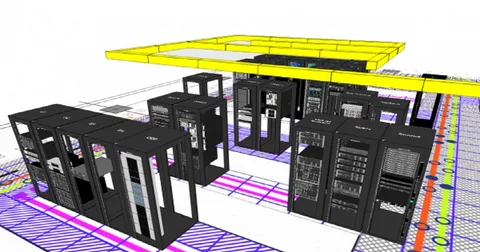
The modern digital landscape is driven by data, and data centres are at the heart of this ecosystem. As the demand for data grows, so does the need for efficient, sustainable, and green data centres. Data Center Infrastructure Management (DCIM) tools have emerged as a game-changer in this context, playing a pivotal role in revolutionising the management and sustainability of green data centres.
The Rise Of Green Data Centers
Green data centres are designed with a focus on energy efficiency, minimising environmental impact, and using sustainable resources. These facilities employ innovative strategies such as using renewable energy sources, optimising cooling systems and implementing energy-efficient hardware. The goal is to reduce the carbon footprint of data centres, which are known for their high energy consumption.
However, the complexity of managing a green data centre requires more than just good intentions and advanced hardware. This is where DCIM tools come into play. These tools provide the necessary oversight, monitoring, and management capabilities to ensure that green initiatives are not only implemented but are also effective and sustainable over time.
What Are Dcim Tools?
DCIM tools are software solutions that integrate IT and facility management disciplines to provide a holistic view of a data centre’s performance. They enable the monitoring, measuring, and management of a data centre’s power consumption, cooling, and overall infrastructure. By providing real-time data and analytics, DCIM tools help operators optimize their facilities for both efficiency and sustainability.
The Role Of DCIM in Green Data Centers
Energy Efficiency Optimization
One of the primary objectives of green data centres is to maximize energy efficiency. DCIM tools contribute significantly to this goal by providing detailed insights into energy consumption patterns. These tools can monitor power usage effectiveness (PUE) and identify areas where energy is being wasted. By analyzing this data, operators can make informed decisions on how to reduce energy consumption, whether by adjusting cooling systems, optimizing server loads, or implementing more efficient power distribution.
Enhanced Cooling Management
Cooling is a major concern in data centres, accounting for a significant portion of energy consumption. DCIM tools help manage and optimize cooling systems by providing real-time data on temperature, airflow, and humidity levels. This information allows operators to fine-tune cooling strategies, such as adjusting set points, implementing hot/cold aisle containment, or deploying liquid cooling solutions. The result is a more efficient cooling system that uses less energy and reduces the overall carbon footprint of the data centre.
Capacity Planning And Management
Efficient use of resources is crucial in green data centres. DCIM tools provide accurate data on the current usage of power, space, and cooling, enabling better capacity planning. With this information, data centre managers can avoid over-provisioning, which often leads to unnecessary energy consumption. Instead, they can allocate resources more effectively, ensuring that the data centre operates within its optimal capacity range.
Sustainability Reporting And Compliance
As environmental regulations become stricter, data centres must comply with various sustainability standards. DCIM tools offer comprehensive reporting features that track key sustainability metrics such as carbon emissions, water usage, and energy efficiency. These reports are essential for demonstrating compliance with regulations and for identifying areas where further improvements can be made. Moreover, they provide transparency, which is increasingly important to customers and stakeholders concerned about the environmental impact of their digital infrastructure.
Automation And Predictive Maintenance
DCIM tools are not just about monitoring; they also enable automation and predictive maintenance. By using advanced analytics and machine learning algorithms, DCIM tools can predict potential issues before they become critical, allowing for proactive maintenance. This approach reduces downtime, extends the lifespan of equipment, and ensures that the data centre operates efficiently with minimal environmental impact.
Conclusion
DCIM tools are revolutionizing the way green data centres are managed by providing the insights and control needed to optimize energy efficiency, cooling, capacity, and sustainability. As the demand for data continues to rise, so does the importance of sustainable data centre practices. By leveraging DCIM tools, green data centres can achieve their environmental goals while maintaining the high levels of performance and reliability that modern businesses require. In a world where sustainability is no longer just an option but a necessity, DCIM tools are indispensable in driving the green data centre revolution.