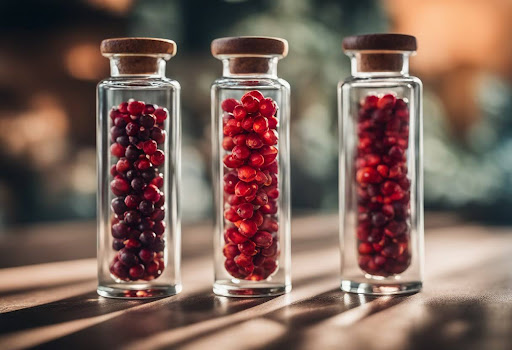
Are you curious about the stability of natural food colorants like Carmine and Annatto? Have you ever wondered if these colors will last as long as their synthetic counterparts? If so, then this article is for you.
In this article, I will explore the stability of natural food colorants and answer some common questions about their shelf life. You will learn what factors affect the stability of natural colors and how to choose the right colorant for your product.
Chemical Structure and Properties
Carmine Characteristics
Carmine is a natural red colorant derived from the cochineal insect. The pigment is extracted from the female insect’s body and eggs by boiling them in water. The chemical structure of Carmine is complex, containing several anthraquinone and carboxylic acid derivatives that give it its unique properties. The main coloring component is carminic acid, which makes up about 20% of the pigment.
Carmine is a water-soluble pigment that is stable in acidic conditions and unstable in alkaline conditions. It is also sensitive to light, heat, and oxidation. Carmine has a bright red color and is commonly used in food, cosmetics, and textiles.
Annatto Characteristics
Annatto is a natural yellow-orange colorant obtained from the seeds of the Bixa orellana plant. The pigment is extracted by soaking the seeds in water or oil. The chemical structure of Annatto is based on bixin and norbixin, which are carotenoid derivatives.
Annatto is a fat-soluble pigment that is stable in acidic and alkaline conditions. It is also heat-stable and resistant to light and oxidation. Annatto has a yellow-orange color and is commonly used in food, cosmetics, and textiles.
Both Carmine and Annatto are natural food colorants that have unique chemical structures and properties. Carmine is a water-soluble pigment that is unstable in alkaline conditions, while Annatto is a fat-soluble pigment that is stable in both acidic and alkaline conditions. Understanding the chemical properties of these natural colorants is essential for their proper use in various applications.
Stability Factors
When it comes to natural colors like Carmine and Annatto, their stability is influenced by various factors. In this section, we will discuss the most significant stability factors that affect natural food colorants.
pH Sensitivity
One of the most critical factors that affect the stability of natural colors is pH sensitivity. The color of natural food colorants depends on the pH of the medium, and any changes in pH can cause a significant color shift. For instance, Annatto colorant imparts a red or orange hue and often has good stability, but its color depends on pH. Therefore, it is essential to monitor the pH of the medium to ensure the stability of natural colorants.
Temperature Effects
Temperature is another factor that affects the stability of natural colors. High temperatures can cause degradation and discoloration of natural colorants. On the other hand, low temperatures can cause crystallization and precipitation of natural colorants. Therefore, it is crucial to store natural colorants at the recommended temperature to maintain their stability.
Light Exposure
Light exposure is a significant factor that affects the stability of natural colors. Exposure to light can cause photodegradation of natural colorants, resulting in color fading or discoloration. Therefore, it is essential to store natural colorants in opaque containers to protect them from light exposure.
Applications in Food Industry
Dairy Products
Natural colors are widely used in the dairy industry to enhance the appearance of products such as cheese, yogurt, and ice cream. Carmine, for example, is a popular natural colorant used in dairy products to provide a red or pink hue. Annatto, on the other hand, is used to give a yellow or orange color to cheese and butter.
Beverages
Natural colors are also used in the beverage industry to provide an attractive appearance to drinks. For instance, turmeric is used to give a yellow color to lemonade, while beet juice is used to provide a red color to cranberry juice. Additionally, anthocyanins are used to provide a purple color to grape juice.
Confectionery
Natural colors are used in the confectionery industry to provide a wide range of colors to candies and other sweets. For instance, spirulina extract is used to provide a green color to gummy bears, while saffron is used to provide a yellow color to hard candies. Additionally, carotenoids are used to provide an orange color to jelly beans.
Conclusion
Natural colors like Carmine and Annatto are generally stable and can be used as an alternative to synthetic colors. Carmine is one of the most stable natural colors, withstanding intense heat treatments like UHT pasteurization and baking, as well as light exposure [1]. Annatto, on the other hand, has good stability, but its color depends on pH [4].
While natural colors may have lower stability compared to synthetic colors, consumer demand for natural and clean label products has driven the replacement of synthetic colorants with naturally derived alternatives. Natural pigment applications can be limited by weaker tinctorial strength, lower stability, and higher cost [1]. However, the benefits of using natural colors outweigh the limitations, as they are perceived to be safer, healthier, and more sustainable by consumers.
In the food industry, natural colors are used in a wide range of applications, including dairy products, sugar confectionery, and baked goods. In the cosmetic industry, natural colors are used in products like lipsticks, eye shadows, and blushes. In the textile industry, natural colors are used to dye fabrics like silk, wool, and cotton [4].