Efficiency and adaptability are key to success in modern logistics and material handling. With the increasing complexity of warehouse management and shipping and the growing demand for flexible equipment, advanced machinery plays a pivotal role in streamlining operations. Machines are among the most innovative equipment used today. These two machines, each designed for specific tasks, are instrumental in improving productivity, reducing labour, and enhancing safety in diverse industries.
Multi-Directional Forklift: A Revolution in Material Handling
A Multi-Directional Forklift is a unique type of forklift designed to navigate tight spaces while handling long or bulky loads efficiently. Unlike traditional forklifts, which can only move forward or backward, this type is engineered to move in multiple directions, including sideways. This is particularly useful in warehouses, distribution centres, or construction sites with critical limited space and manoeuvrability.
Key Features of Multi-Directional Forklift
One of the standout features of a Multi-Directional Forklift is its ability to pivot in various directions. This allows operators to easily handle long materials such as steel beams, lumber, or pipes, even in confined spaces. Traditional forklifts often struggle with such loads due to their limited mobility, but multi-directional models eliminate the need for large turning radii.
These forklifts are often equipped with advanced technology, such as electronic controls and adjustable forks, further enhancing their versatility. Operators can quickly switch between directions without complex manoeuvres, improving efficiency and reducing time spent on tasks. In some models, sensors and cameras are integrated to ensure precision and safety during operation.
Benefits in Warehousing and Manufacturing
Using a Multi-Directional Forklift is particularly advantageous in industries that regularly handle oversized or elongated materials. For example, timber yards, metal fabrication facilities, and manufacturing plants can significantly benefit from the forklift’s ability to transport materials safely and efficiently. Instead of requiring multiple equipment for different tasks, a multi-directional model can perform various functions, cutting equipment costs and improving overall efficiency.
Moreover, this forklift’s ability to navigate narrow aisles can maximise the storage capacity of warehouses, as operators can move goods in and out of tight spaces without risking damage to materials or structures. As a result, businesses can optimise space utilisation, which is crucial in today’s high-demand, space-constrained environments.
Container Lifting Machine: Essential for Heavy-Duty Tasks
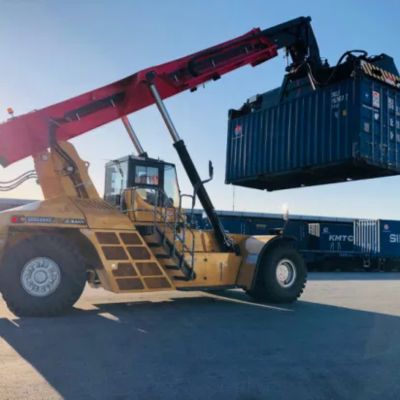
While the Multi-Directional Forklift excels in navigating tight spaces and handling long materials, the Container Lifting Machine is designed for more robust, heavy-duty tasks. These machines are specifically engineered for lifting and transporting large containers, typically used in shipping and logistics industries.
Role in Shipping and Logistics
The role of Container Lifting Machine in global logistics cannot be overstated. With the increasing reliance on containerisation for the transport of goods across the world, these machines are essential for efficient port operations, inland shipping terminals, and large distribution centres.
The primary function of these machines is to lift containers onto and off trucks, railcars, or ships. They can stack vertically to maximise space in container yards or storage facilities. This capability is critical in busy ports, where space is often limited, and rapid loading and unloading are essential to keep the supply chain moving smoothly.
Efficiency and Safety Considerations
One of the most significant advantages of using Container Lifting Machine is improving operational efficiency. These machines can handle containers quickly and precisely, reducing the time required for loading and unloading goods. This translates into faster turnaround times for trucks and ships, minimising delays and improving overall productivity.
Regarding safety, Container Lifting Machine are built to handle heavy loads with stability. Advanced safety features, such as load sensors and stability control systems, minimise the risk of accidents. Operators are also provided with ergonomic controls that reduce fatigue and allow them to work for extended periods without compromising safety.
Conclusion
In conclusion, the Multi-Directional Forklift and Container Lifting Machine are essential equipment that address specific material handling and logistics challenges. While the former excels in manoeuvring long or bulky loads in tight spaces, the latter is indispensable for handling large, heavy containers in shipping yards and ports. Both machines contribute to increased efficiency, improved safety, and cost savings, making them valuable assets in manufacturing and global trade industries. As technology continues to evolve, these machines will likely become even more sophisticated, further revolutionising how materials and goods are transported and managed worldwide.