Nitrogen Oxides, also known as NOx, constitute one of the significant air pollutants produced from combustion-based processes. As the power consumption and the use of diesel engines increase, NOx emissions have become a substantial issue for environmental regulators and industries as a whole. Knowing the process by which NOx is created, the reason it’s harmful, as well as ways to be controlled effectively, is crucial to ensure environmental compliance and sustainable operation.
Understanding the NOx Emissions
NOx is a general term used to refer to the gases that are formed by the reaction of oxygen and nitrogen at high temperatures. The reactions are typically seen when fuel is burned in engines, turbines, generators, and boilers. While nitrogen is present naturally throughout the atmosphere, extreme conditions in combustion chambers cause it to convert to reactive oxides of nitrogen.

Of the various Nitrogen oxides (NO), two are the most important in terms of environmental impact: nitric oxide (NO) and nitrogen dioxide (NO2).
The most critical components of NOx are NO and NO2.
- Nitric Oxide (NO) is generated directly from combustion. It is relatively inert and rapidly reacts with oxygen when released into the air.
- Nitrogen Dioxide (NO2) is created when NO oxidises following the emission. NO2 is more harmful and has a significant impact on respiratory illnesses, air pollution, and the formation of smog. Environmental monitoring and emission standards mainly concentrate on NO2 because of its grave negative impact on ecosystems and health.
Why Diesel Combustion Produces High NOx
Diesel engines run with higher compression ratios and temperatures than petrol engines. These conditions enhance the efficiency of fuel, but they also create a perfect environment for NOx production. If the temperature of combustion exceeds the limit, then nitrogen molecules present in the intake air start reacting with oxygen, leading to the production of NOx emissions.
Factors that increase NOx production are:
- High engine loads
- Continuous operation
- The combustion process is characterised by excess oxygen.
- Advanced ignition timing
This is what makes diesel generator sets and engines with heavy-duty capabilities a significant source of NOx for the industrial and commercial industries.
The major contributors to NOx Pollution
1. Diesel Generator Sets
DG sets are extensively used to backup and provide constant power supplies in hospitals, factories, as well as data centres or construction locations. The extended operating hours and the large consumption of fuel result in substantial NOx emissions, particularly in semi-urban and urban areas.
2. Road Transport Vehicles
Diesel-powered buses, trucks, and commercial vehicles are major contributors to NOx pollution, particularly when traffic is jammed and engines are not operating efficiently.
3. Thermal Power Stations
Power plants that depend on diesel, coal, or gas combustion create massive amounts of NOx as a result of the continuous high-temperature operations and enormous consumption of fuel.
4. Industrial Heating Systems
Boilers, furnaces, and heaters in industries that manufacture release NOx, which is a byproduct from burning fuel, especially if older equipment is not equipped with modern emission control systems.
Environmental Impacts of NOx Emissions
NOx emissions are a direct as well as indirect effect on the environment. A significant and noticeable impact is the creation of ground-level Ozone, which is the main element in smog that decreases visibility and air quality. NOx can also react with other chemicals and moisture within the atmosphere to create acid rain, which can harm the soil’s fertility and the water bodies, crops, and forests.
In addition, the deposition of nitrogen from NOx alters ecosystems in natural ways by increasing the nutrient levels in water and soil and causing an ecological imbalance over time.
Health Risks in connection with exposure to NOx
The exposure to high levels of NOx can cause serious health issues. Nitrogen dioxide can cause irritation to the lungs and lower the body’s immunity to respiratory diseases. Exposure for long periods can aggravate the symptoms of chronic bronchitis, asthma, and other lung ailments.
Children, older people, and those with already existing respiratory or cardiovascular issues are at greater risk. In industrial areas that are densely populated, managing NOx emissions is therefore a health concern for everyone.
NOx Regulations and Emission Limits in India
India regulates the NOx emissions limit via legal frameworks formulated through the Central Pollution Control Board (CPCB) and the norms for vehicle emissions as per the Bharat Stage standards.
- CPCB Guidelines set NOx limits that are acceptable for diesel generators in relation to the engine’s capacity and the year of manufacture.
- Bharat Stage VI (BS-VI) norms set strict NOx limits for vehicles, which align Indian standards with international emission benchmarks.
Industries that operate equipment powered by combustion have to adhere to these regulations in order to avoid fines and operational limitations.
Industrial Strategies to Reduce NOx Emissions
Reducing NOx emissions requires the combination of optimisation of combustion and post-combustion treatments. While engine tuning can reduce NOx production, it is not enough to ensure regulatory compliance.
Exhaust Gas Treatment Technologies
The latest exhaust systems have been designed to minimise harmful gases following combustion. The systems chemically convert NOx into less hazardous substances before the exhaust gases are released into the atmosphere.
Relevance of RECD Technology
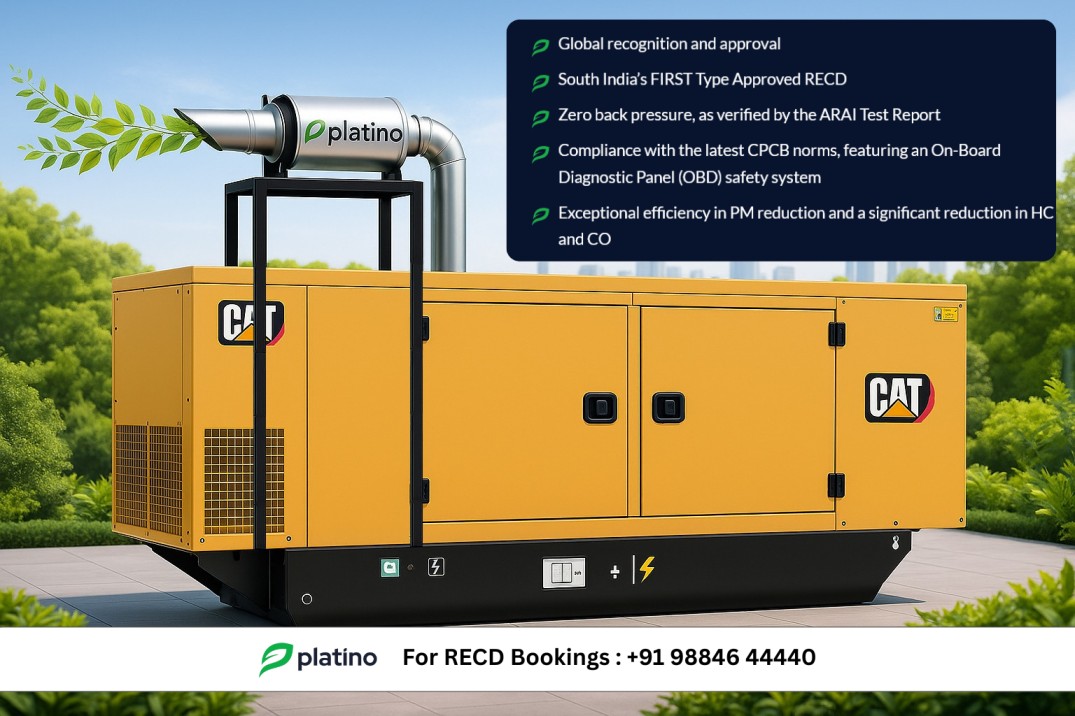
Industrial companies and DG set-based applications are increasingly using reactive Emission Control Device (RECD) technology. RECD systems control the emission of gases using chemical reactions that drastically reduce NOx levels, without affecting the efficiency of engines or fuel consumption.
Role of Platino RECD in Industrial NOx Control
Platino RECD solutions are developed specifically to combat NOx emissions generated by diesel engines and generator sets. The systems are designed to satisfy Indian regulations while providing advantages to industrial users in terms of practicality.
The advantages of Platino’s ReCD are:
- Effective reduction in NOx emissions
- Conformity with CPCB standards
- A minimal impact on engine performance
- Simple installation and low-maintenance
- Responsible operation for the environment
Through the integration of the Platino RECD system, companies can reduce emissions from exhaust and show an environmental commitment.
Frequently Asked Questions on NOx
1. Is NOx only produced by diesel engines?
No. While diesel engines are among the significant contributing factors, NOx is also produced by boilers, power plants, furnaces, and petrol engines.
2. Why is NOx regulation important?
NOx can cause health issues, air pollution, and environmental damage, and is therefore essential for public safety.
3. Can NOx emissions be reduced without replacing engines?
Yes. Exhaust treatment systems, such as RECD, enable industries to cut down on NOx without requiring major engine modifications.
4. Are NOx limits mandatory in India?
Yes. CPCB, as well as Bharat Stage regulations, require NOx compliance for vehicles and industries.