Introduction
Zombie TV shows have captivated audiences for decades, blending horror, action, and science fiction into thrilling narratives. From The Walking Dead to The Last of Us and Kingdom, these shows explore various ways a zombie virus could spread and take over civilization. But how much of this is rooted in real science? Could a zombie virus ever happen in real life? In this article, we’ll break down the science behind zombie outbreaks in TV shows and explore whether such a scenario is scientifically plausible.
How Zombie Viruses Work in TV Shows
Different zombie TV shows have unique explanations for how their undead creatures come to be. Some rely on viral infections, while others take inspiration from fungi or even supernatural forces. Here’s a look at some of the most common depictions:
- The Walking Dead – A Mysterious Viral Infection
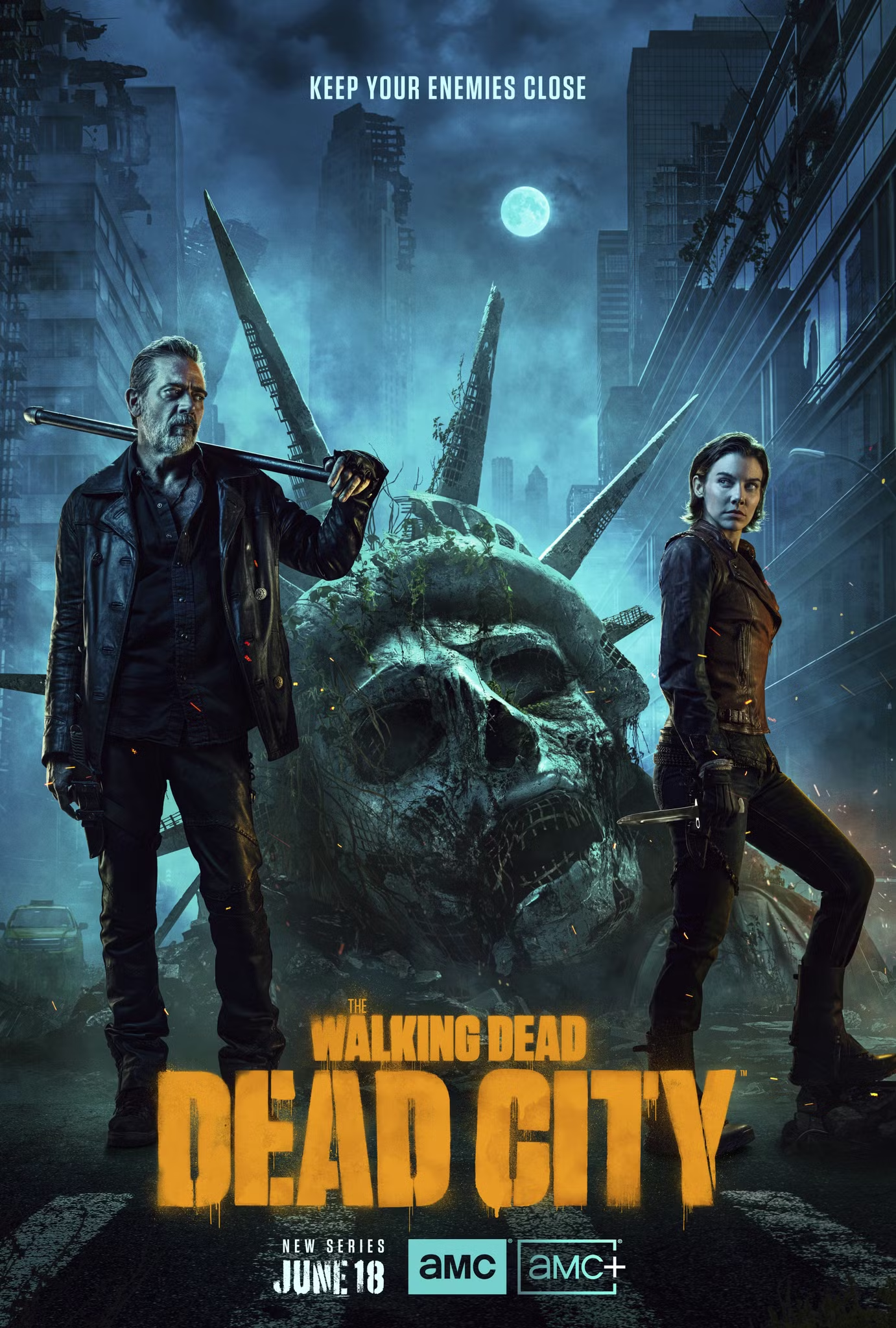
The Walking Dead never explicitly names its zombie virus but suggests it is a pathogen that infects all humans. Upon death, the virus reanimates the body, turning the host into a flesh-eating monster. The infection is transmitted through bites, which introduce the virus into the bloodstream, leading to death and reanimation.
- The Last of Us – A Fungal Apocalypse
This series takes a different approach, drawing inspiration from the real-world Cordyceps fungus. In The Last of Us, a mutated strain of this parasitic fungus infects humans, taking over their nervous system and turning them into aggressive, mind-controlled creatures. The infection spreads through bites and inhalation of fungal spores.
- Kingdom – A Parasitic Origin
This Korean historical zombie series introduces a parasite-based infection that spreads through blood. The infected transform into fast, ravenous zombies, with the parasite using their bodies to reproduce and spread further.
These fictional examples borrow elements from real-life science, making the idea of a zombie virus seem more grounded. But is there any real scientific basis for these terrifying outbreaks?
Could a Real Zombie Virus Exist?
While no known pathogen can create traditional zombies, there are real-world diseases and parasites that exhibit some zombie-like effects. Let’s examine a few potential candidates.
- Rabies – The Closest Real-Life Example
Rabies is a viral disease that affects the brain and nervous system, causing aggression, confusion, and an intense aversion to water. If the virus mutated to prolong its incubation period and increase aggression without killing the host too quickly, it could resemble the fast-spreading infections seen in zombie media.
- Prion Diseases – Brain-Destroying Proteins
Prions are misfolded proteins that cause neurodegenerative diseases like Creutzfeldt-Jakob disease (CJD) and mad cow disease. These diseases destroy brain tissue, leading to erratic behavior, loss of coordination, and eventually death. While prions don’t reanimate the dead, they show how infectious agents can alter human behavior in devastating ways.
- Parasitic Mind Control – The Cordyceps Fungus
In the real world, the Ophiocordyceps unilateralis fungus infects ants, taking over their bodies and forcing them to climb high before dying, allowing the fungus to spread spores. While this fungus doesn’t infect humans, a theoretical mutation could create a similar effect in people, leading to behavior-altering infections.
The Role of Science in Zombie TV Shows
TV writers often take inspiration from real-life diseases, using them as the foundation for fictional zombie viruses. But how accurate are these portrayals?
Accuracy: Shows like The Last of Us use real fungal biology but stretch the science to make it more terrifying. While Cordyceps can’t currently infect humans, the idea of a fungal pandemic isn’t entirely unrealistic.
Real-Life Inspirations: The Walking Dead is based on virology concepts, though it ignores the fact that decomposition would make long-term zombie survival impossible.
Scientific Balance: Writers often sacrifice scientific accuracy for storytelling, making infections spread faster and zombies last longer than they realistically would.
Hypothetical Scenarios: How a Zombie Virus Could Spread
If a zombie-like infection did exist, how would it spread? Scientists have explored theoretical models, and here’s what they suggest:
- Airborne vs. Bloodborne Transmission
Bloodborne infections (like in The Walking Dead) require direct contact, making them slower to spread.
Airborne pathogens, like influenza, could create a fast-moving zombie-like outbreak if they affected behavior.
- The Role of Mutation and Evolution
Viruses and fungi evolve over time, potentially adapting to new hosts. If a neurological virus mutated to cause extreme aggression while keeping the host mobile, it could resemble fictional zombie outbreaks.
- Government Responses and Containment Strategies
In the real world, agencies like the CDC and WHO would attempt to contain an outbreak through quarantines, vaccines, and rapid response teams. However, a fast-spreading, aggressive infection could overwhelm medical infrastructure, leading to a widespread pandemic.
Could Humanity Survive a Zombie-Like Outbreak?
If a real zombie-like virus emerged, could humanity fight back? Here’s how we might respond:
- Medical Countermeasures and Potential Cures
Antiviral drugs or antifungal treatments could slow the spread of infections.
Vaccines could be developed, but this takes time.
- Survival Strategies Based on Real Epidemiology
Social distancing, isolation, and hygiene measures would help prevent transmission.
Military and law enforcement would likely implement martial law to contain outbreaks.
- The Psychological and Social Impact of an Outbreak
Fear and paranoia would spread faster than the infection.
Governments might struggle to maintain order, leading to breakdowns in civilization, as depicted in many zombie TV shows.
Conclusion
While a true zombie virus is unlikely, elements of zombie fiction are based on real science. Diseases like rabies, prion disorders, and parasitic fungi show how infections can alter behavior in extreme ways. TV shows like The Last of Us and The Walking Dead take inspiration from these real-world examples, blending fact with fiction to create compelling stories.
The fascination with zombies isn’t just about horror—it’s about our fear of pandemics, loss of control, and survival instincts. Shows continue to explore these themes, keeping audiences engaged and questioning, “What if?”
For the latest news on zombie TV shows, movies, and science-based zombie fiction, stay tuned to ZombieWire—your go-to source for all things undead!