In today’s competitive digital landscape, trust isn’t just important for eCommerce success—it’s essential. With thousands of online stores vying for attention, consumers are cautious about where they spend their time and money. If your eCommerce app lacks credibility, users will abandon their carts and never return.
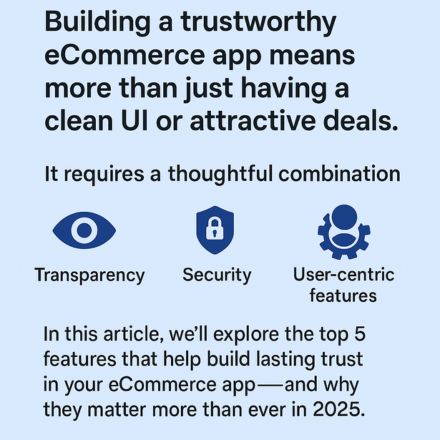
Building a trustworthy e-Commerce app development means more than just having a clean UI or attractive deals. It requires a thoughtful combination of transparency, security, and user-centric features. In this article, we’ll explore the top 5 features that help build lasting trust in your eCommerce app—and why they matter more than ever in 2025.
Read Also:- How to Develop a Successful E-commerce App: A Step-by-Step Guide
1. 🔐 Secure Payment Gateways and Data Protection
Why does it build trust?
One of the top concerns users have while shopping online is the safety of their financial data. If your app fails to instill confidence in the checkout process, users won’t complete transactions. To build credibility, implementing secure payment gateways is a must.
What to implement:
- SSL encryption to protect user data.
- Trusted third-party payment processors (e.g., Razorpay, PayPal, Stripe, PhonePe).
- PCI-DSS compliance for handling card payments.
- Multi-factor authentication (MFA) for account and payment verification.
Pro tip: Display trust badges or security certificates clearly during checkout. Inform users about how their data is protected.
Stat to consider:
According to Baymard Institute, 17% of users abandon carts due to concerns about payment security.
2. ⭐ Authentic Reviews and Ratings
Why does it build trust?
Modern consumers rely heavily on peer reviews. The presence of authentic user reviews not only influences purchase decisions but also signals that your business is legitimate and open to feedback.
What to implement:
- Verified buyer reviews for each product.
- Star-rating systems.
- The ability to upload user-generated content (UGC) such as photos and videos.
- AI-powered review moderation to filter spam without removing genuine feedback.
Best practice:
Avoid deleting negative reviews. Instead, respond publicly to resolve issues. This shows transparency and a customer-first approach.
Bonus tip: Add filters to help users sort reviews by rating, most recent, or verified purchase.
3. 📦 Transparent Return, Refund & Shipping Policies
Why does it build trust?
Shoppers want to know they’re not trapped into a purchase. A vague or hard-to-find return policy signals a red flag to most users. Clear, customer-friendly policies create peace of mind and reduce decision anxiety.
What to implement:
- Clear return windows (e.g., “7-day return, no questions asked”).
- Easy-to-follow refund process with status tracking.
- Transparent shipping timelines and costs before checkout.
- Order tracking features with real-time updates.
Feature spotlight:
Enable in-app return request submission with automated responses and pickup scheduling.
Trust signal: Add a dedicated FAQ or policy section within the app for easy access, and use icons or summaries at checkout to reinforce the policies.
4. 🛒 Guest Checkout and Seamless Onboarding
Why does it build trust?
While collecting user data is important for personalization, forcing users to sign up before placing an order can reduce conversions and create distrust. Many users prefer to explore or make a quick purchase without long forms or email verification loops.
What to implement:
- Guest checkout option without mandatory account creation.
- Social logins (Google, Apple, Facebook) for one-tap sign-ins.
- Quick onboarding with minimal data requirements.
- Progress indicators in multi-step checkout flows.
Why it matters:
Simple, fast, and frictionless onboarding improves trust by demonstrating that your app respects the user’s time and autonomy.
UX Tip: Allow users to create an account after the order is placed by offering order tracking or loyalty benefits as incentives.
5. 💬 Real-Time Support & Chatbots
Why does it build trust?
When users feel heard and supported, they’re more likely to complete a purchase and come back. A lack of immediate support in moments of doubt often leads to cart abandonment. Whether it’s a size query, a delayed order, or a payment glitch, fast support can make or break trust.
What to implement:
- Live chat support with real agents during business hours.
- AI-powered chatbots for 24/7 instant responses to common queries.
- In-app ticketing systems or email support.
- Multilingual support if targeting global or regional audiences.
Pro tip: Use chat triggers like “Need help?” on product or checkout pages to proactively offer support. Personalize chatbot responses using order history or cart data.
Bonus: Include a human handover option in your chatbot for complex issues.
Additional Trust-Boosting Features (Honorable Mentions)
If you’re aiming for a best-in-class eCommerce experience, consider implementing these extra features as well:
- Personalized product recommendations (based on past activity).
- Trust seals from platforms like Google Trusted Store or Norton.
- Social proof widgets (e.g., “125 people bought this today”).
- Third-party integrations for verified delivery (like Shiprocket, Delhivery).
- App performance optimization for fast load times and zero crashes.
Read Also:- 10 Must-Have Features for Successful E-Commerce Apps
Final Thoughts
In the e-commerce space, trust is currency. You may offer great deals, unique products, or lightning-fast shipping, but without features that foster credibility, users won’t convert or stay loyal.
Start by securing your app, then focus on customer experience—everything from reviews and returns to real-time support matters. The most successful eCommerce apps in 2025 will be those that don’t just sell but also build relationships through reliability.