


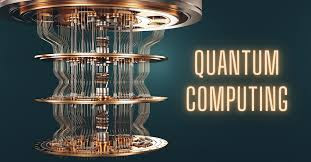
Unraveling the Power of Quantum Computing: A Glimpse into the Future
In the ever-evolving landscape of technology, quantum computing stands as a beacon of innovation, promising to revolutionize the way we process information and solve complex problems. Unlike classical computers, which rely on bits to represent information as 0 or 1, quantum computers utilize qubits, allowing for the simultaneous processing of multiple states. This fundamental difference opens the door to unprecedented computational power and capabilities, potentially impacting fields ranging from cryptography to drug discovery.
Understanding Quantum Computing:
At the heart of quantum computing lies the principle of superposition, where qubits can exist in multiple states simultaneously. This phenomenon enables quantum computers to perform parallel computations, exponentially increasing their processing capabilities compared to classical computers. Additionally, quantum entanglement allows qubits to be interconnected, leading to enhanced communication and data transfer.
The Quantum Computer Advantage:
One of the most significant promises of quantum computing is its ability to solve complex problems that are currently intractable for classical computers. Tasks such as factoring large numbers, optimizing complex systems, and simulating molecular interactions could be revolutionized by quantum algorithms. For example, Shor’s algorithm, developed by mathematician Peter Shor, demonstrates the potential of quantum computing to efficiently factor large numbers, posing a threat to traditional cryptographic methods.
For more information, click here…


