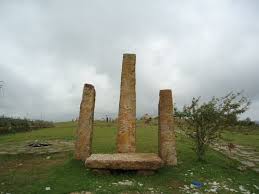
Located in the northeastern part of India, the state of Meghalaya is renowned for its lush green landscapes, stunning waterfalls, and rich cultural heritage. Among its many cultural treasures, the Khasi Monoliths stand out as one of the most intriguing and historically significant features of the region. These ancient stone structures are scattered throughout different parts of Meghalaya, which offer a glimpse into the interesting traditions, beliefs, and rituals of one of the major indigenous groups of the state-the Khasi tribe.
In this article, we shall look at the Khasi Monoliths, their significance, cultural relevance, and reasons why they form such an important part of Meghalaya’s history.
What Are Khasi Monoliths?
The Khasi Monoliths are massive stone pillars or vertical stones that, according to history, the Khasi people constructed ages ago. Stone formations in this category are said to be memorials commemorating certain events, persons, or ancestors of the Khasi community. They usually stand in clusters or rows in different areas, such as village centers, graveyards, or places of religious importance.
Monoliths can be of different shapes and sizes; for example, very simple stone pillars, and some are carved with intricate symbols and inscriptions. Some of the monoliths are formed by the standing of a single stone, while others are in a complex group of stones. These megalithic structures are found across the Khasi Hills, a region in Meghalaya inhabited by the Khasi race.
Archaeological Importance and Culture
The Khasi Monoliths hold great cultural and spiritual importance for the Khasi people. The Khasi tribe has a rich tradition of oral history and mythology, which is often reflected in the monolithic structures. The erection of these stones is typically tied to significant events in Khasi history, including the deaths of important leaders or the celebration of victories in battle. The stones are not just memorials but are also believed to serve as symbols of strength, unity, and respect for ancestors.
Each monolith has a different design, and some stones are thought to symbolize certain deities, while others are used to mark sacred sites or important cultural practices. For instance, the stones are used in the worship of nature spirits, which is an important aspect of the Khasi belief system. The Khasi people are known to be part of a matrilineal society, and the monoliths sometimes are used to honor female ancestors, who are very important in Khasi culture.
The most characteristic aspect of the Khasi Monoliths is their relation to the traditional ways of the tribe. Traditionally, the Khasi people were beleivers in a tight bond between the living and the dead. Monoliths were raised as part of the rituals to honor the spirits of ancestors and ensure their presence in the lives of the coming generations. These stones are symbols of continuity and are often associated with the idea that the dead continue to watch over and protect the living.
Types of Khasi Monoliths
There are several types of Khasi Monoliths, each serving a specific purpose or representing a particular aspect of Khasi culture. Some of the most common types include:
Memorial Monoliths: These are erected in memory of significant events, such as the death of an important person or the commemoration of a victory. Memorial monoliths are often found in clusters, symbolizing a family or community.
Cultural Monoliths: These monoliths mark important cultural practices, such as the site of rituals or celebrations. They may also be used to commemorate the founding of a village or community.
Religious Monoliths: Many of the Khasi Monoliths are connected to religious beliefs. These stones usually stand near a sacred grove or place of worship where one believes the spiritual and physical world are connected.
Victory Monoliths: Some monoliths were erected after a military victory. These are usually inscribed with symbols or markings that portray the tribe’s victories and prowess.
Funerary Monoliths: They are used for marking burial places. The stones may have carvings or symbols on them that point out the importance of the person whose body lies inside.
Famous Places of Khasi Monoliths
Khasi Monoliths are spread over different regions in Meghalaya, but a few places have gained more recognition due to large numbers of ancient stone structures located there. There are two prime locations where Khasi Monoliths are found:
- Mawphlang:
Mawphlang is one of the most prominent places where people can see the majesty of Khasi Monoliths. Situated about 25 kilometers from the state capital, Shillong, Mawphlang is home to a sacred grove and thousands of monolithic structures. Most of these ancient stones are contained in the Mawphlang Sacred Grove, a lush forest that is sacred to the Khasi tribe. This is said to have been in use for centuries and continues to be a central location for the performance of Khasi religious rituals.
Mawphlang- A visitor to Mawphlang can enjoy a massive set of Khasi Monoliths, which stand tall, even with the intricately carved pieces against the dark backdrop of the forest. Besides being a site of historical significance, it is a spiritual site that can enlighten one on how the Khasi people felt about their relations with nature and their ancestors.
- Nongkrem:
Another important place where the Khasi Monoliths are found is in Nongkrem, East Khasi Hills. This is a place that is rich in culture and where the Nongkrem Dance is held; it is the traditional festival of the Khasi people. The monoliths here relate to the rituals performed during the dance, which is held to worship the local deities.
There are few monoliths found in the Nongkrem region, which is connected to the tribe’s heritage. Many of these stones are placed in groups, marking important community events, rituals, and ancestral worship practices. Nongkrem is a must-visit for anyone interested in experiencing the rich cultural traditions of the Khasi people.
Khasi Monoliths and Modern-Day Khasi Culture
Despite the passage of time and modernity, Khasi Monoliths continue to play an important role in the lives of Khasi people. The deep respect of the tribe for their ancestors and spiritual beliefs ensures that these ancient stones remain part of their cultural identity.
In recent times, the preservation and promotion of Khasi Monoliths is undertaken as an important cultural heritage in Meghalaya. Many visitors from around India and around the world come to Meghalaya to visit these ancient stones and learn the history and traditions of the Khasi people. The importance of these sites is also identified by the Meghalaya Tourism Department, and it has been taking steps to ensure the protection and upkeep of these monoliths for future generations.
Conclusion
The Khasi Monoliths of Meghalaya are more than ancient stones; they are a living testimony to the rich cultural and spiritual heritage of the Khasi people. The remarkable structures speak of a time long past and reveal how deep the respect is among the Khasi people for their ancestors and their bond with nature. Whether it is the memorial monoliths to important leaders or the religious stones marking sacred sites or simply a victory stone to commemorate triumphs, each telling its own story is integral to the Khasi tribe’s identity.
As Meghalaya continues to attract tourists and cultural enthusiasts, the Khasi Monoliths will undoubtedly remain a vital part of the state’s heritage, preserving the traditions and beliefs of the Khasi people for generations to come. For anyone visiting Meghalaya, a journey to witness these ancient stones is a must, as it offers an unforgettable experience and an opportunity to connect with the deep history and spirituality of the Khasi tribe.