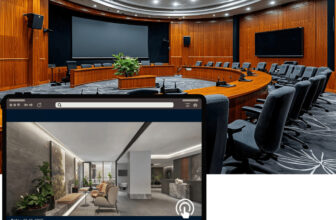
By 2024, indoor mapping technology has become a revolution in how we get around and engage with inner spaces. This system allows people to easily navigate places like shopping malls, airports, hospitals or colleges which are crowded with a lot of different rooms. This article discusses various sectors transformed by this technology, what fueled these changes and gives some insights into what might happen next within the indoor mapping and positioning industry.
Indoor Mapping: An Overview
To truly appreciate the benefits, it’s important to first understand what is indoor mapping and how it functions within various sectors. Think of indoor mapping and navigation as digital compasses for navigating indoor spaces; they give you real-time directions, personalized information and let you monitor assets within a facility. The growth of indoor navigation systems is driven by the increasing demand for more accurate and user-friendly indoor mapping technology solutions across various sectors.
Market Opportunities and Growth
The worldwide indoor positioning systems industry will be worth around USD 4.31 billion by 2024 to USD 25.95 billion by 2032, reflecting a CAGR of whopping 24.5%. With smartphones becoming more popular than ever before along with digitization it has become possible for people to receive real-time location based information on their handheld devices even when they are outside any building or inside it. However despite being used extensively within certain areas, over 65% of health care facilities do not know what an indoor location systems is thus providing a great chance for indoor mapping companies dealing with indoor maps to introduce their products into this particular market segment.
Innovative Use Cases of Indoor Mapping
- Shopping Malls
Indoor mapping has transformed the retail experience by guiding shoppers to specific stores, offering personalized promotions based on their location, and providing a virtual overlay of products in real-time. It enhances the customer experience and boosts sales through proximity marketing and real-time engagement.
- Healthcare Facilities
Precision in indoor maps play a major role in hospital ensuring patient safety and operational efficiency. These maps help in real-time asset tracking, improving emergency response times, while at the same time aiding contact tracing during health crises. Moreover, healthcare providers can easily update maps to reflect new constructions or changes in the facility layout, ensuring that both staff and patients have access to the most current information. However, despite its immense potentiality within healthcare industry, many people working within this sector are still not aware about what they stand to gain by installing such systems. This therefore implies that there is still a lot of room left for growth as far as indoor mapping solutions technologies are concerned especially in relation to medical facilities.
- Airports
Airports are among the most complex and challenging environments to navigate, with sprawling layouts and constant activity. Indoor mapping systems streamline passenger navigation from check-in to boarding, reducing stress and improving the overall travel experience. These systems also help airport management monitor passenger flow and optimize security routes. The integration of indoor location systems with existing GPS technologies enables faster and more accurate indoor navigation, which is particularly valuable in such high-traffic environments.
- Universities
Indoor mapping on large campuses helps students find their way to lecture halls, offices, and amenities. It also plays an essential role in safety by enabling real-time communication during emergencies so that everybody is well informed about their environment. The flexibility of these systems allows for quick updates which makes them an invaluable tool for campus management.
- Warehouses
In logistics, indoor mapping optimizes picking and packaging processes thereby enhancing efficiency. Systems like these provide real-time location data that assists workers in finding items quickly within the warehouse as well as following the most efficient routes – this can lead to substantial time savings along with cost savings.
Technologies Driving Indoor Mapping
The rapid advancements in indoor mapping are fueled by various technologies:
- Augmented Reality (AR): AR aids navigation by projecting digital information onto the real world thus helping users move around complex spaces easily.
- Artificial Intelligence (AI): AI learns from user behavior and adjusts itself according to environmental changes; this enhances accuracy levels of indoor mapping systems greatly.
- 5G Connectivity: Real-time updates become possible due to high speeds achieved through 5G connectivity while low latency makes performance of AR-based navigation systems better than ever before realized.
- Indoor Positioning Systems (IPS): IPS uses sensors together with Wi-Fi or Bluetooth connection points so as to provide precise locations; this makes it easier for people navigate through buildings accurately taking into account their immediate surroundings at all times.
Regional Market Insights
North America is expected to dominate the global indoor location market, with a market share of 30.2% by 2024, driven by the advanced wireless connectivity availability and 3D based indoor mapping technology among other technologies. The high penetration rate of smart devices in the region also supports setting up these systems for positioning and navigation purposes. On the other hand, Asia-Pacific is emerging as a lucrative opportunity for indoor mapping companies, especially within countries such as China, Japan and Singapore where 4G deployment coupled with rising smartphone penetration rates has laid ground work towards adoption of indoor mapping solutions.
Conclusion
Industries are likely to continue being transformed by indoor mapping technology well after 2024. With retail being one area of application along side healthcare, logistics and even education there is no limit to what can be achieved using this method. The truth is as technology advances further into our lives so does it become integrated with them making it easier for people navigate through complex environments intuitively and effortlessly.
What industries or sectors do you think can benefit greatly from adopting indoor mapping technology? Share your thoughts below!